
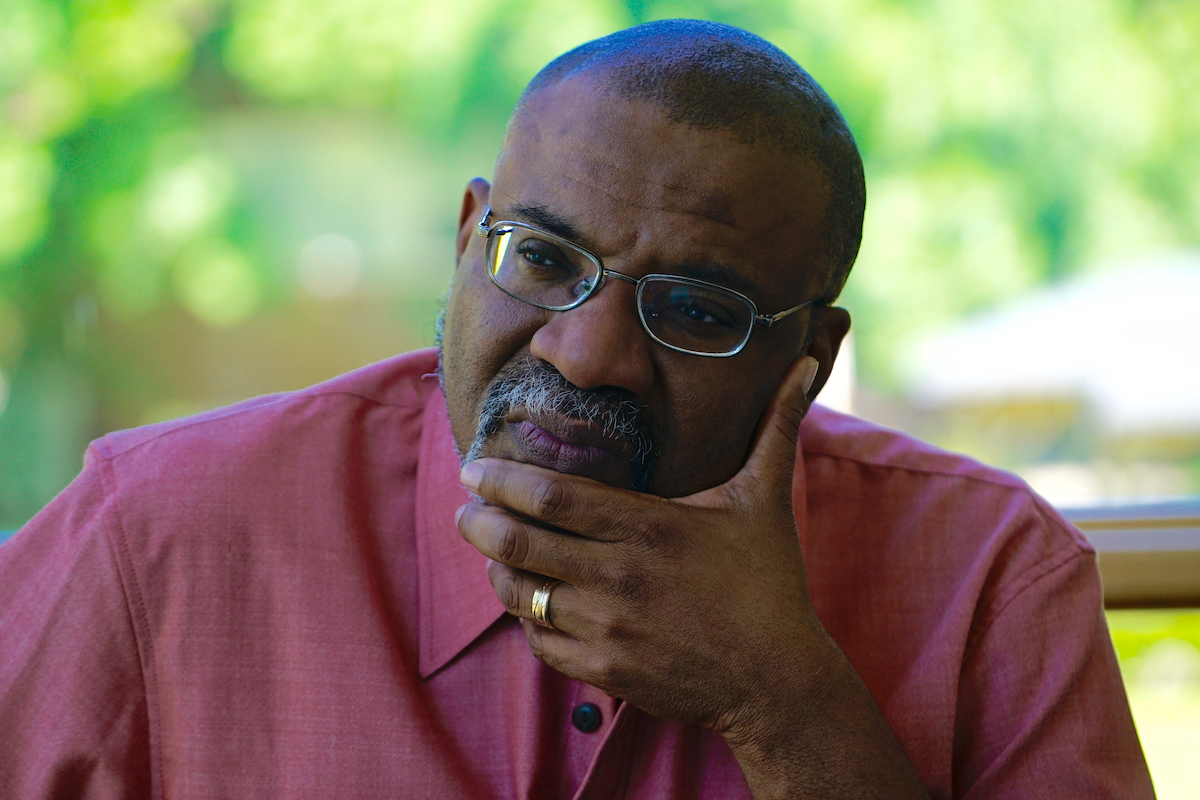
KINGSTON, R.I. – Sept. 29, 2023 – Ghanaian poet, actor, editor, critic, musician and Emmy Award-winner Kwame Dawes will read a selection of poems from his 20 poetry collections on Thursday, Oct. 5, as part of the University of Rhode Island College of Arts and Sciences’ 75th anniversary celebration. The event also forms part of the Center for the Humanities’ lecture series, “Innovations in Storytelling.”
Dawes’ presentation is scheduled for 4 p.m. in the Higgins Welcome Center’s Hope Room. Dawes will sign books after his half-hour reading. The event is free and open to all. Registration is required. The lecture will also be livestreamed. Please, go to the lecture page to view the livestream.
“Kwame Dawes’ recognitions – from the Pushcart Prize to a Guggenheim Foundation fellowship to an Emmy Award – speak to the breadth and impact of his work,” said Jeannette Riley, dean of the College of Arts and Sciences. “He is recognized not just for his poetry, but also for his other writings that include an influential book on Bob Marley’s lyrics to plays to non-fiction collections to news reporting.
“I’m very pleased to host him as part of the college’s anniversary celebration. Engaging our students and the community in the humanities is central to our mission and Dawes’ writings illustrate the power of language – the poem itself – to move us to question and contemplate the world and our place in it.”
Dawes, the Chancellor’s Professor of English at the University of Nebraska, is the author of more than 35 books of poetry, fiction, criticism and essays. His latest collection, “City of Bones: A Testament,” brings together lyrical, narrative and elegiac poems that consider the existence of a historical African soul that inhabits present day African-American and Caribbean sensibility. He is also the editor-in-chief of “Prairie Schooner” at the University of Nebraska-Lincoln, and co-founder of the Calabash International Literary Festival, which was launched in May and will be held biannually in Jamaica.
He is the recipient of numerous honors, including a Pushcart Prize for Poetry in 2001 and the Forward Poetry Prize for Best First Collection in 1994, and was named Literary Person of the Year in 2022 by Brittle Paper, recognizing his contributions to the advancement of the African literary industry and culture.
He is also the recipient of a Guggenheim fellowship and an Emmy Award in New Approaches to News & Documentary Programming: Arts, Lifestyle & Culture for his project documenting HIV/AIDS in Jamaica that combined poetry, photography and music.
The event is part of the College of Arts and Sciences’ 75th anniversary celebration, which follows Dawes’ reading on the Quad at 5 p.m. Dawes’ presentation was organized and sponsored by the college, along with the English and Africana Studies departments.
The Center for the Humanities’ “Innovations in Storytelling” series, which runs through April, presents different views of the art of storytelling through the experience and work of a diverse group of storytellers, including cartoonists, musicians, anthropologists, quilters and historians.