
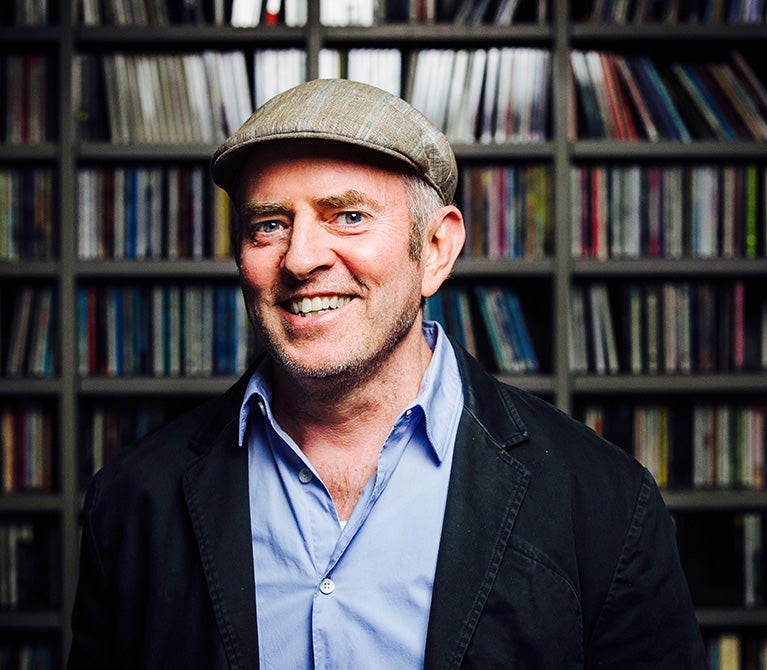
KINGSTON, R.I. – Nov. 14, 2022 – Tom Philpott, a food and agriculture correspondent for Mother Jones, will present at the 2022 University of Rhode Island Honors Colloquium, Tuesday, Nov. 29, on “Perilous Bounty: Emerging Crises in Industrial Agriculture.”
Philpott is the author of the book Perilous Bounty: The Looming Collapse of American Farming and How We Can Prevent It, which was named a finalist for the New York Public Library’s Helen Bernstein Book Award for Excellence in Journalism. He has won numerous awards, including a Gerald Loeb Award for Distinguished Business and Financial Journalism and previously served as the food editor for Grist magazine.
Philpott will speak at 7 p.m. at Edwards Hall (64 Upper College Road) on the Kingston Campus, as part of the fall Honors Colloquium, “Just Good Food,” which will be presented in person and streamed live (video links are available the day of each event at the link above). The lecture is co-sponsored by the Harrington School of Communication & Media.
Philpott speaks and publishes widely on the politics and economics of food and agriculture. Utne Reader named him one of “25 Visionaries Who Are Changing Your World” in 2011 and Food & Wine spotlighted him as an innovator in 2008.
His writing and comments on food politics have appeared in The New York Times, Newsweek, and Mother Earth News, and hehas been interviewed by numerous radio programs, including the BBC and NPR’s The Splendid Table and Fresh Air with Terry Gross.
The URI Honors Colloquium is the University’s premier lecture series. Hosted by the University’s Honors Program, this university-wide educational forum is free and open to the public. This year’s lecture series is bringing several experts to the Kingston Campus to examine local and global food systems, examining ways to create equitable, sustainable and resilient food systems, on Tuesday evenings through Dec. 13. Two speakers remain on this fall’s colloquium schedule: Leah Penniman (Dec. 6), of Soul Fire Farm, and Ricardo Salvador (Dec. 13), Union of Concerned Scientists. Learn more about the fall colloquium.
Parking for Edwards Hall is available in Lot 1 behind the Higgins Welcome Center; please use 75 Briar Lane, Kingston, for GPS.