Home
Home Browse
 Close
Close Events
 Maps
Maps Email
Email Brightspace
 eCampus
 Handshake

 Email
Email eCampus
 Brightspace
 Handshake



To schedule a research appointment, please contact us through this email address or at (401) 874-4632.
THE COLLECTIONS
The University Archives and Special Collections Unit (FKA Distinctive Collections) provides access to its holdings of unique research collections. Collections of primary and secondary resources are acquired, organized, and preserved by the Library and are made available to members of the university community and other interested parties according to the mission and policies below.
SEARCH
Published material in University Archives and Special Collections is cataloged in the ExLibris. Information about archival records, collections of personal papers, business records, political papers, and oral histories is provided through the use of finding aids, many of which are available online. Many of our finding aids are also cataloged in the ExLibris; a search for these cataloged finding aids can be combined with a search for print materials in the system. Enter a keyword in the search box to information about and in the collections. If you don’t find what you are looking for, contact us for further assistance.
Collection Descriptions
CONTACT INFORMATION
We are open to research by appointment from 9:00 a.m.- 4:00 p.m., Monday through Friday. University Archives and Special Collections is closed weekends and State recognized holidays. To request an appointment, please call (401) 874-4632 or email.
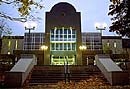
The University Archives and Special Collections Unit is located on the second floor of the Robert L. Carothers Library. Entry to the Reading Room is adjacent to the central staircase. For directions and parking information, please see Maps and Directions to URI.
For reference questions or to arrange a tour, email us or call (401) 874-4632.
For information about the Commercial Pattern Archives (CoPA), contact copa-group@uri.edu.
ELIGIBLE USERS & RESTRICTIONS ON USE
Before beginning research, everyone is required to register and a Research Form must be completed if the researcher is using manuscript or archival collections. Collections are used under specific restrictions and may not be removed from the Reading Room area or borrowed from the collections. Permission may be granted to obtain photo or digital copies of items in the collections. A fee is charged for this service and the copying is performed by the staff.
Care must be exercised at all times when handling materials. Only pencils may be used when taking notes in the reading room. Pencils and scrap paper are provided for Reading Room use if needed. Consuming food or beverages, smoking, and the use of pens are not permitted in the reading room.