Multicultural Center

About Multicultural Center

What is the Multicultural Center?

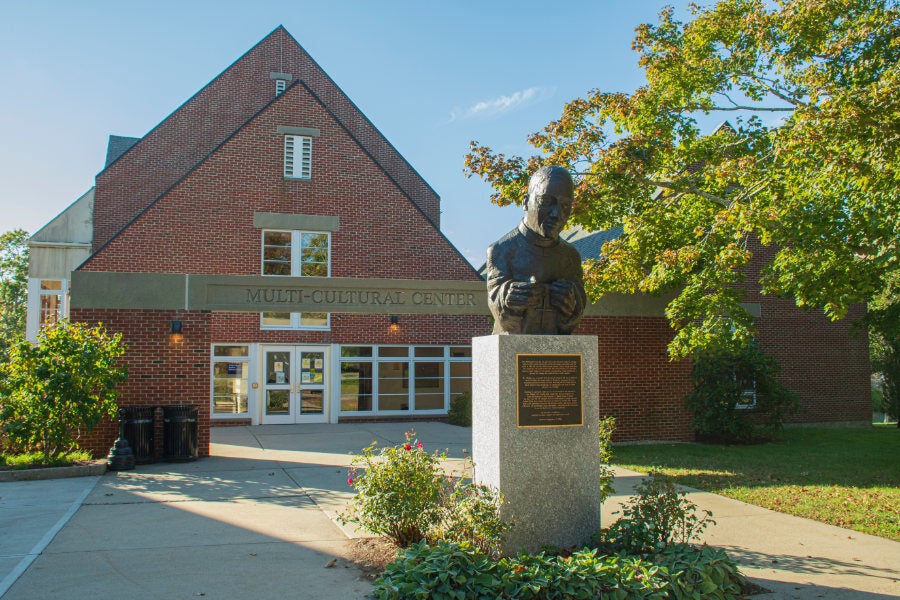
The URI Multicultural Center (MCC) is a place dedicated to developing a supportive and inclusive campus culture across the boundaries of culture, identity, and discipline. Celebrating unity in diversity, the Multicultural Center invites all of it's students, faculty, staff, administrators, alumni, and other friends to join in its work in creating a community of learners within and beyond URI.

I) Mission

In support of the primary mission of the University toward building a culture of learning, the University of Rhode Island (URI) Multicultural Center critically engages students, faculty, staff, administrators, and other allies in creating and sustaining a campus culture in which diverse persons, organizations, and groups can learn and develop to their greatest potential, and participate in society to their maximum ability. Toward this purpose, the URI Multicultural Center collaborates with others in providing a variety of programs, activities, and services that help diverse learners to systematically explore the ways we culturally construct identity (who we are), knowledge (what we mean), power (how we assert influence), community (how we relate and belong to each other), and culture (how we make meaning).

II) Vision

We envision the URI Multicultural Center as a catalyst committed to the development and dissemination of cutting edge knowledge and practice for a University in which students, faculty, administrators, staff, and other diverse learners equip themselves with the attitudes, knowledge, and skills to transform the campus on which they study and the world in which they live into culturally competent and inclusive learning communities in which difference is perceived as a resource, rather than a threat; and in which social equity, information, and freedom of choice are accessible to all.

III) Values

We believe the mission and vision of the URI Multicultural Center are grounded in the values upon which the theory and practice of multiculturalism were founded:

Social Justice

Social Change: We believe that society can be fair and just in eradicating structural barriers to maximizing full participation and development for all.

Social Accountability. We believe that society can be fair and just in assuming personal, familial, organizational, institutional, societal, and global responsibility for the impact of our choices and behaviors on each other.

Social Empowerment. We believe that society can be fair and just in acting together to involve others to provide opportunities for personal, familial, organizational, institutional, societal, and global transformation.

Learning

Cultural Construction of Learning. We believe that learning is most effective when we realize it is subjectively shaped by the cultural environment in which it takes place, including the ways of making meaning and the framework of ideas shared by members of groups.

Critical Thinking. We believe that learning is most effective when learners have the opportunity to systematically examine and reexamine the assumptions underlying what they know to be true, in safe learning and development environments.

Relational Learning. We believe that learning is most effective when the learning process is collaboratively shared with others within a systematic framework of reciprocal expectations and responsibilities.

Personal, Social and Cultural Development

Integration of the Self with Society and Culture. We believe that development is most effective when it is understood that authentic knowledge of society and culture begins with the growth and maturation of the self, and the acquisition of life skills.

Experiential Learning and Development. We believe that development is most effective when learners have the opportunity to actively search for meaning in individual and group experiences and in meaningful contexts.

"Whole Person" Wellness. We believe that development and learning are requisite and complementary to each other, grounded in social, cultural, emotional, mental, spiritual, and physical well-being.

Professional Development

Standards of Excellence. We believe that our work, life, and play should model high expectations, ethical and moral standards, and caring for self and others.

"Community of Practice". We believe that our work will be more effective because we share with individuals and groups of professionals across disciplinary, institutional, and geographical boundaries the status of being bonded to each other by experience with a common set of problems and opportunities, a common pursuit of solutions, and a shared body of perspectives and practices.

Commitment to Students. We believe that our work finds its greatest reward in the impact that it has on the comprehensive learning, growth, and development of students, and their integration into the academic, professional, and lifelong learner communities.

IV) OBJECTIVES

  • 1) Collaborate with others to create and sustain a welcoming, inclusive and supportive campus culture and climate where diverse learners have the opportunity to interact with each other, and to share ideas and experiences both similar and different from their own.
  • 2) Collaborate with others to generate a multicultural cocurriculum (out-of-class learning) that promotes cultural competence and positively enhances the curriculum.
  • 3) Collaborate with others to build and strengthen internal and external partnerships and alliances.
  • 4) Collaborate with others to create and sustain the capacity to design and implement multiculturalism on campus.

V) GOALS

  • 1A) Acknowledge, reward, and celebrate leadership and excellence from students, staff, administrators, and other allies in advancing multicultural initiatives incorporating teaching, learning, research, and/or outreach to internal and/or external constituencies.
    2A) Facilitate planning for multi-year, sustainable projects that provide opportunities for developing "bridging" and "bonding" relationships between members of the extended campus community from underrepresented populations as well as majority and international groups.
    3A) Encourage the research and infusion of diversity in the history and traditions of URI into its official discourse and cultural symbols.
  • 1B) Increase the quality, quantity, outreach, and inclusiveness of the Annual Calendar of Multicultural Events sponsored by the URI Multicultural Center and its affiliated student organizations, and by other major presenters on campus.
    2B) Design and implement a strategy for continuous quality improvement based on systematic assessment of the URI Multicultural Center's learning outcomes.
    3B) Expand educational enhancement opportunities and retention support targeted to student organization leaders, and URI Multicultural Center student staff, multicultural living/learning communities, and members of advisory and program committees.
  • 1C)Reinforce the image and identity of the URI Multicultural Center through the design and implementation of a comprehensive marketing plan.
    2C)Create and sustain alliances between the URI Multicultural Center and its professional colleagues, such as multicultural practitioners, researchers, teachers, and associations, locally, statewide, regionally, nationally, and internationally.
    3C)Create and sustain relationships with faculty as the prime conservators of the learning and research mission of the University.
  • 1D)Design and implement a comprehensive plan to utilize technology to improve learning, communication, and outreach to stakeholders, and to internal and external constituencies, utilizing blogging, Ipods, streaming video, Facebook, MySpace, PeopleSoft, WebCT, True Outcomes, and Intranet.
    2D)Facilitate plan to retain and increase professional staff, and to enhance professional development.
    3D)Plan and coordinate strategies to increase revenue streams for the URI Multicultural Center.

Announcements

Facilities