The U.R.I. Psychology Department takes great pride in its undergraduate
curriculum offerings. Two years prior to the mandate in Spring
2004 by the Rhode Island Board of Governors for Higher Education, we
began work on learning outcome assessment.
Our first step was to survey upper-level psychology
majors to learn whether they believed that their psychology courses allowed
mastery of the 100+ skills/concepts in psychology identified as essential
by the APA Task Force on Undergraduate Major Competencies. The
results were highly satisfactory.
Next, we surveyed our psychology faculty in order to
assess their views of whether our undergraduate curriculum offerings
address each skill/concept identified by the APA Task Force. Again,
the results were encouraging. Therefore, in February 2006, the
U.R.I. Psychology Department formally adopted the Ten Learning Assessment
Goals identified by APA as important in the undergraduate psychology
curriculum.
Learning Goals Adopted by the U.R.I. Psychology Department
in February 2006
Knowledge, Skills, and Values Consistent with the Science and Application of Psychology:
Goal 1. Knowledge Base of Psychology
Goal 2. Research Methods in Psychology
Goal 3. Critical Thinking Skills in Psychology
Goal 4. Application of Psychology
Goal 5. Values in Psychology
Knowledge, Skills, and Values Consistent with Liberal Arts Education Further Developed in Psychology:
Goal 6. Information and Technological Literacy
Goal 7. Communication Skills
Goal 8. Sociocultural and/or International Awareness*
Goal 9: Personal Development
Goal 10: Career Planning and Development
*Our only modification in wording was to add the word, "or" to
Learning Goal 8.
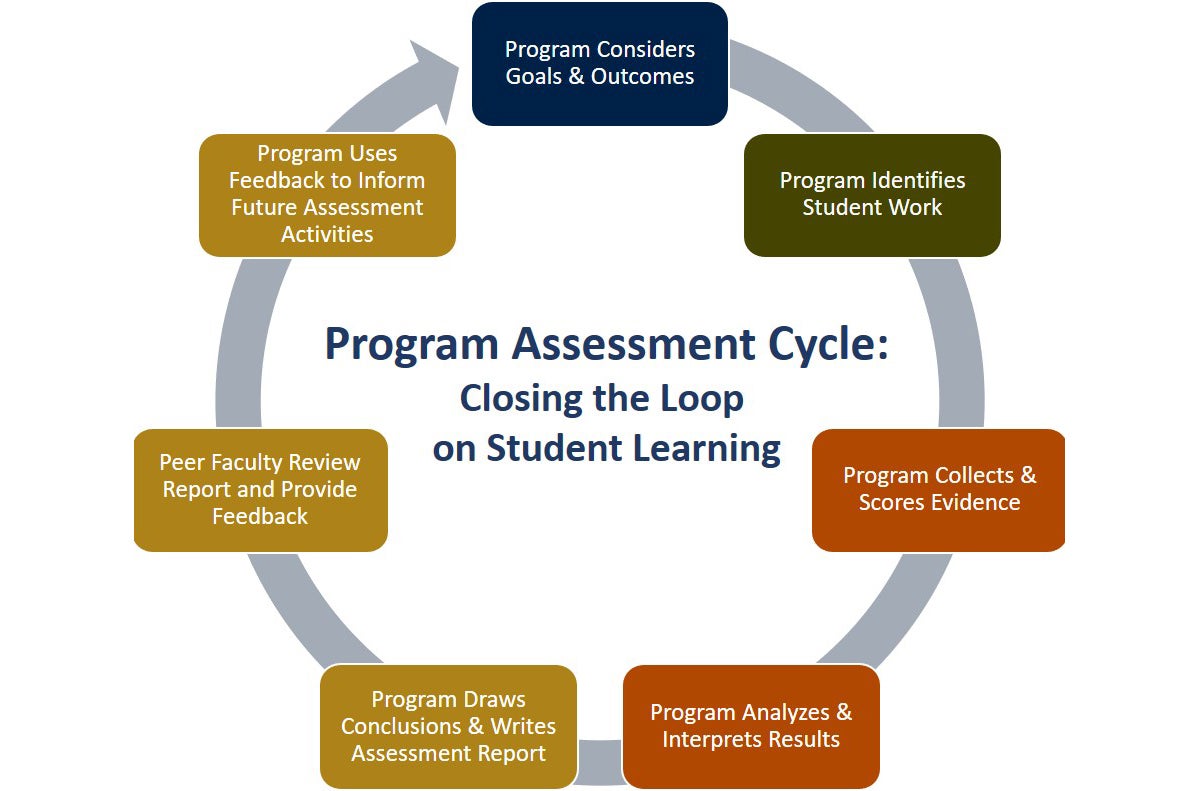
We are currently in the process of developing instruments
for learning assessment. In doing this, we decided that our basic
approach would be to:
1. use multiple methods of testing,
2. use new technologies for testing,
3. use longitudinal testing.
We particularly believed that it would be beneficial to use new technologies in assessments:
1. Webct,
2. E-portfolios.
To date, we have developed an initial version of a Webct instrument
that is undergoing validation procedures. The design of this instrument
was based in part on a cumulative final exam from an introductory psychology
course, with a small committee of faculty* adding additional multiple
choice items, each matched to one of our the ten Learning Goals. At
the present time, this Webct instrument is composed of a database of
about 150 items. Participating students are each presented with
a small sample of items, allowing completion in less than 15 minutes,
thereby avoiding fatigue effects. This instrument also contains
items that assess student satisfaction with teaching quality, topic coverage,
as well as self-mastery of concepts and skills. With validation
and continued use, this Webct instrument will ultimately allow on-going
longitudinal testing of our students.
*This committee consisted of Professors Boatright-Horowitz,
Flannery-Schroeder, Rogers, and Valentino, working with the assistance
of Professor John Stevenson, Chairperson.
In preparation for the use of E-portfolios, we have
collected and analyzed course syllabi from our undergraduate psychology
courses in order to determine the types of course products available
for student portfolios. Rubrics for assessment will be developed
in the summer of 2007. Course assignments regarding the development
of individual student E-portfolios will be initiated in our large (700+)
introductory psychology course during the subsequent semester. Our
faculty will then encourage our psychology majors to add appropriate
course products to their E-portfolios throughout their college careers.
Current Discussions:
As a direct result of these Learning Outcome Assessment procedures, we have decided to offer students an opportunity to take a new capstone course in psychology, offered for the first time during the Fall 2007 semester. As a 1-credit course, the focus will be on student preparations for their future careers. Specifically, in this course, we will require our students to:
1. Meet a criterion score on the new Webct instrument,
2. Evaluate and finalize their e-portfolios,
3. Attend psychology career workshops,
4. Develop CVs or resumes.
In conclusion, the U.R.I. Psychology Department welcomes the challenge of the mandate by the Rhode Island Board of Governors for Higher Education to develop Learning Goals and assessment procedures, essentially viewing this mandate as support for work that we have already begun.