
By Hannah MacDonald, CELS Communications Fellow
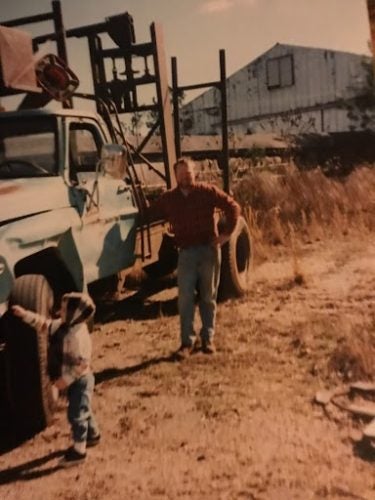
A fifth-generation Alabamian and the son of a teacher and a poet-turned-woodcutter, Dr. Madison Jones grew up with a relationship with nature informed by writing. By identifying and cutting trees with his father and being exposed to American literature at a young age he was immersed in a life surrounded by the environment and writing. Dr. Jones’ fascination with the intersection between science and writing has been the focus of his academic and professional career. In 2020, he was brought on as an Assistant Professor of Writing and Rhetoric/Natural Resources Science in a joint appointment with the Harrington School of Communication and Media within the College of Art and Sciences and the College of the Environment and Life Sciences, further blending the art of writing with science.
Prior to his appointment at URI, as an eager undergrad looking to dive further into American literature, Dr. Jones began reading authors like Henry David Thoreau and William Bartram, who are known for their work as poets, historians, and early American naturalists. These authors shaped Jones’ understanding of science writing. “American science writing is now thought of as a modern or contemporary practice. But actually, American literature is sort of based on science writing in a lot of ways,” remarks Jones “and we don’t really think about it like that, so that initial interest led me to start thinking more deeply about how science and writing are intrinsically connected.”
Dr. Jones pursued a doctoral program at the University of Florida in writing and rhetoric and focused on how location-based digital technologies (e.g. maps and augmented reality) are changing the way we think about science, communication, and environmental advocacy. As a cyclist with an interest in how cycling is a form of environmental advocacy, he worked on a digital project involving ghost bikes. Ghost bikes are roadside memorials where cyclists have been fatally injured by a car. Ghost bikes are frequently removed from their location as they take up space and block infrastructure so Jones and colleague Jacob Greene co-developed an augmented reality project where he built augmented ghost bicycles that could be put back in these places where the bikes had been removed. Seeing the success of this project he became interested in how emerging technologies were transforming our relationship with place and space. “My interest in emerging technologies led me to a lot of the projects that I am developing today and also some of my creative work doing place-based poetry,” says Jones.
At CELS, Dr. Jones is focused on applying a transdisciplinary approach to science communication. “We often operate on this deficit model, where we think about communicators as lacking science and scientists as lacking communication skills,” he claims can hinder the rich collaborations science communication requires, “So getting to work side by side with scientists every day is crucial to the way I think that good science communication should be done.” Jones has just launched the Digital Writing Environments, Location, & Localization (DWELL) Lab at URI. The DWELL Lab is designed to investigate how location-based media is changing the ways that writers and readers interact with place. The lab will focus on community-engagement science communication, social justice, and environmental advocacy projects. Dr. Jones designed this lab to blend well with the courses he teaches in writing and rhetoric by offering high-impact experiential learning initiatives in support of the local community. “I’m really interested in helping students develop projects that they’re interested in, and that they’re excited about,” states Jones. DWELL just announced its first student grant award recipients to design projects engaging the public with science. This year’s recipients will be creating a podcast on offshore wind and designing an immersive creative art piece warning about toxic chemicals.
“I take a very student-centered approach to the way I think about my pedagogy. I tend to focus on what I imagine students will need in any given situation. And I try to constantly solicit feedback, to better understand what those needs are,” remarks Jones. Graduate students can take Graduate Writing in the Life Sciences (WRT 533) which is offered every semester, and beginning in the spring of 2023, Rhetorical Field Methods for Science Communication (BES 521) and Visualizing Environmental Advocacy (NRS 568). Undergraduate students can take Science Writing (WRT 334) every fall semester. “I hope to tightly weave my courses into DWELL so the lab is going to be a hub for the intersection of my research and teaching,” states Jones.
On top of teaching, Dr. Jones pursues his passions in writing and just received the 2022 Rhode Island State Council of the Arts (RISCA) Fellowship in Poetry. This fellowship funds his work for a selection of environmentally-focused poetry from his forthcoming collection Losing the Dog, which will be published in 2023. This collection uses ecopoetry to make sense of the destruction and loss in the natural world as well as share the relationships people form with the environment. Dr. Jones is using place-based writing to widen audiences, open creativity, and effectively communicate science. His poetry and digital projects are an extension of his research into the spatial, social, and historical dimensions of science writing.