
Spanish IEP student, Michael Logar hikes in the Torres del Paine, Patagonia during a year abroad in Chile
When you connect meaningfully across cultures, you begin to see the world from a perspective that is different from your own. Taking on the world’s challenges requires the type of thinker who can look at a problem from multiple vantage points and find solutions others can’t see.
The International Engineering Program, or IEP, offers an unparalleled experience for students looking to become truly global engineers. You’ll earn two degrees simultaneously: a B.S. in an engineering discipline and a B.A. in Chinese, French, German, Italian, Spanish, or Global Language Area Studies with a concentration in Japanese. By combining the power of a world-class engineering program, immersion in a foreign language and culture and a year studying and interning abroad, the five-year program prepares engineers who can work collaboratively and efficiently on international teams.
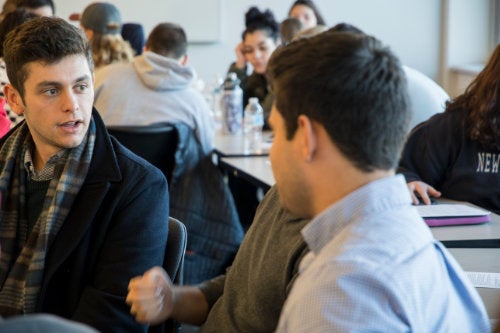

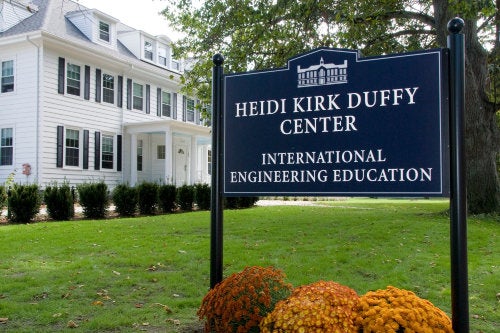
The University of Rhode Island's groundbreaking International Engineering Program (IEP) serves as a model for engineering and language educators across the entire country.The Institute of International Education
News
- Sensei for a day: URI students bring Japanese learning to local middle school students - Through their JPN 302 class, a group of URI students, including 3 IEP/ICSP students, helped connect with middle schoolers at Davisville Middle School to introduce them to Japanese language and culture.
- French consul general visits URI to recognize faculty, France-URI connections - The U.S.-French relationship has long been positif, since Lafayette visited Rhode Island, and the French government sent a statue across the sea to recognize shared connections. That well-established connection between countries was celebrated recently at the University of Rhode Island, marking continuing collaborations across borders.
- New Frontiers to Explore between the Humanities and Engineering - 2023 marked the beginning of URI’s two-year National Endowment for the Humanities Connections grant. Learn about some of the first activities sponsored by these funds.
- Mastering Connections - Bringing international graduate students into the College of Engineering through both new and established dual master’s degree programs is a major priority of the International Engineering Program. Last August, ten dual master’s and MBA students from TU Braunschweig and TU Darmstadt graduated from URI last August. One of the Fulbright scholars, Leonie Otte, is still […]