
As a leader in Pharmaceutical Sciences graduate education, the URI College of Pharmacy offers you programs and specializations in highly sought after fields available at few other universities in the country. You will study with faculty who are world-renowned, respected experts in basic, clinical, and applied pharmaceutical sciences, and who exemplify translational, highly collaborative, interdisciplinary training and research. Passionate about teaching, research, and mentoring, our faculty are committed to training the next generation of scientists and academicians.
Program Director

Associate Professor, Paramaz Avedisian Endowed Chair in Medicinal Organic Chemistry, Director of Graduate Programs
Office: 495N
401.874.9361
deyuli@uri.edu
The college offers M.S. and Ph.D. level degrees in Pharmaceutical Sciences with four specializations.

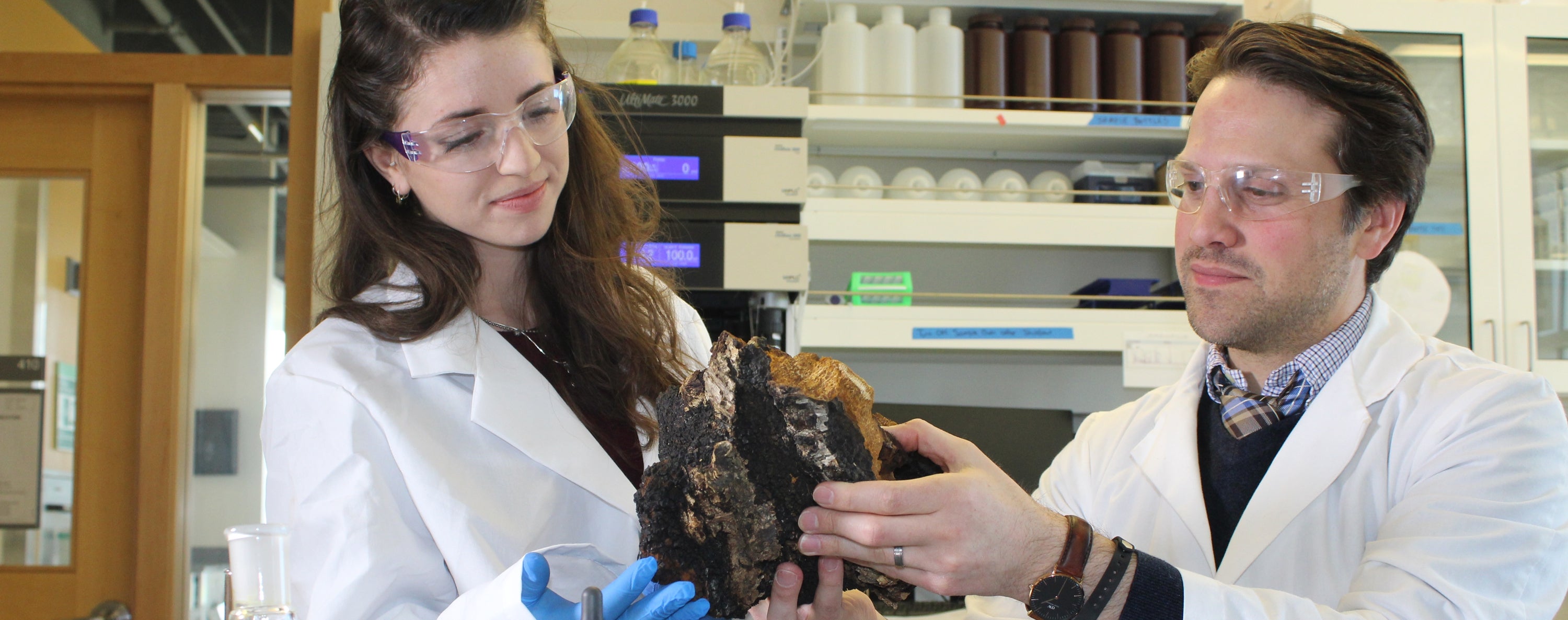
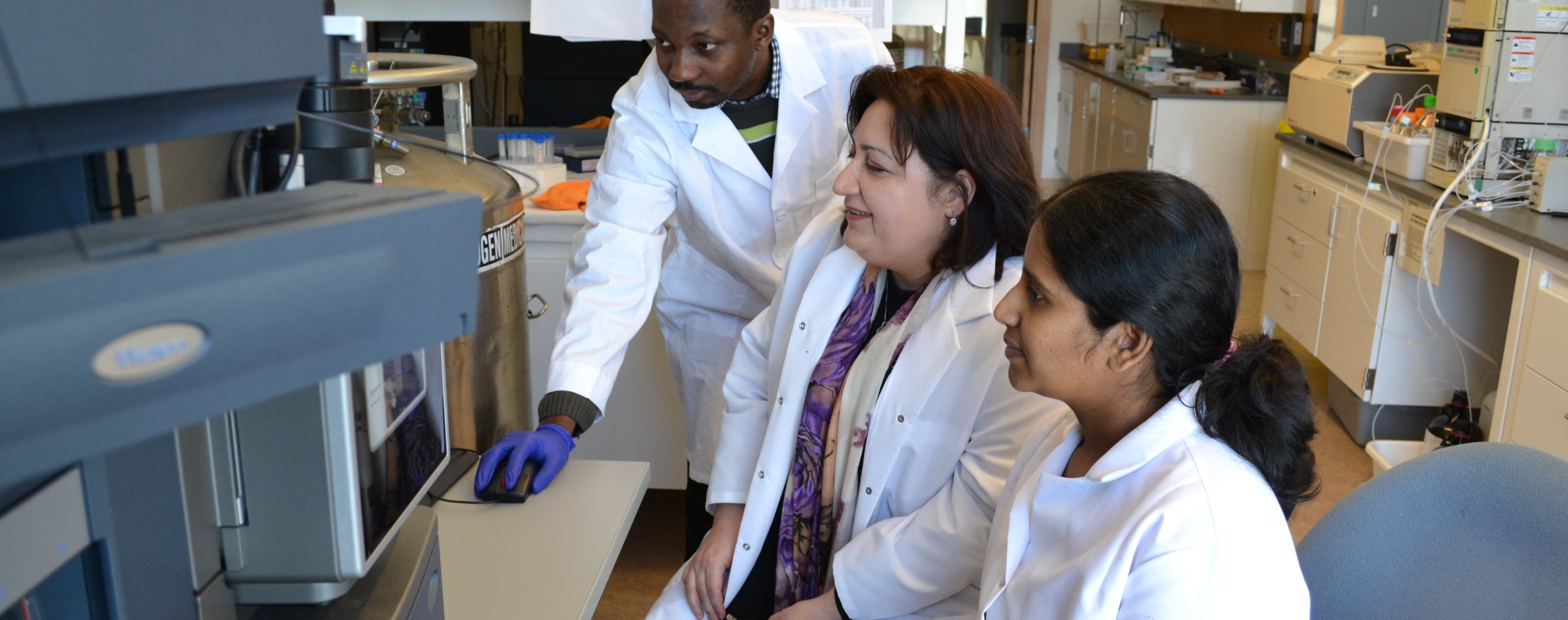
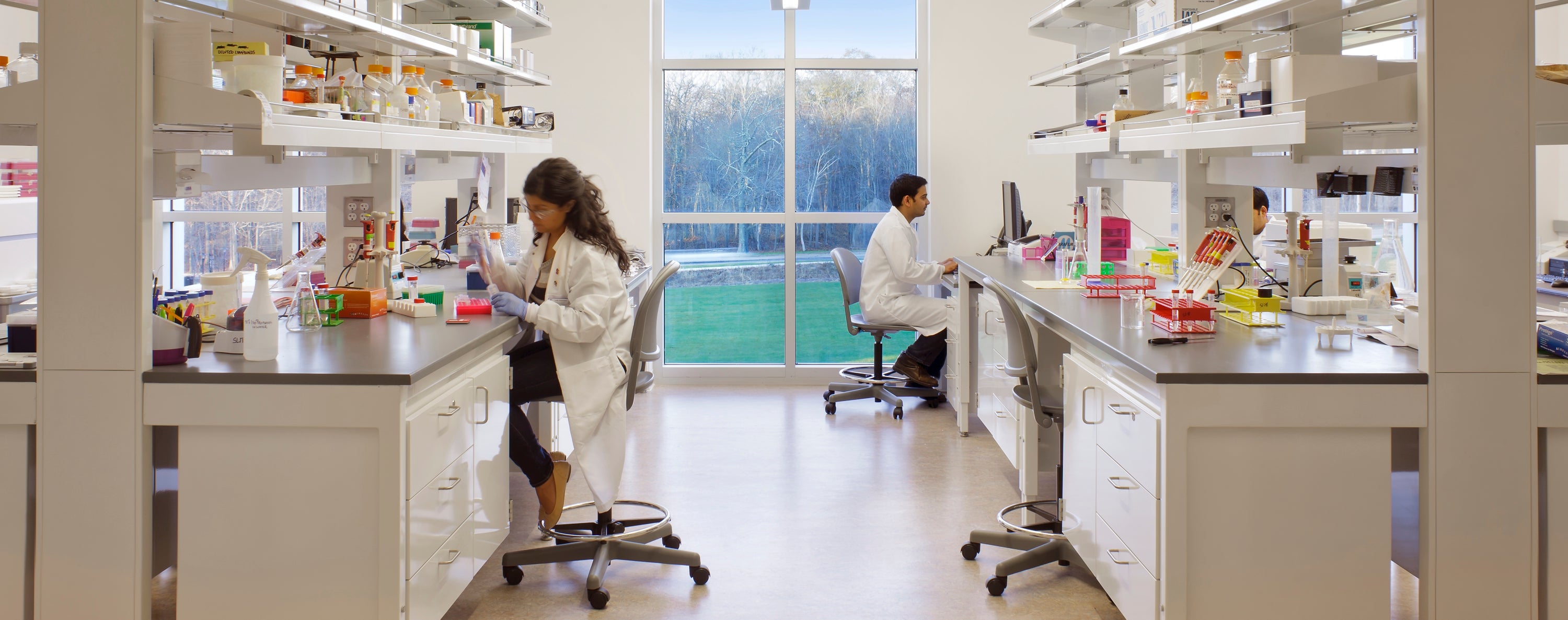

Fall 2021 Graduate Program Alumni Panel
In our Fall Graduate Program panel we are invited some of current graduate students, alumni and faculty to speak about their path to their current role, the impact of URI, and how their education prepared them for the future. Find out more about our panelist here.
Graduate Education
Admission
Master of Science (M.S) Program
- GRE scores (requirements listed below);
- Pharm.D. or bachelor’s degree in pharmacy, chemistry, biological sciences or allied sciences;
- TOEFL (waived for applicants from countries where English is the primary language).
Doctor of Philosophy (Ph.D.) Program
- GRE scores (requirements listed below);
- TOEFL (waived for applicants from countries where English is the primary language);
- M.S. degree in pharmacy, chemistry, biological sciences or allied sciences, or bachelor’s degree in one of these areas with evidence of superior ability.
- Qualified students may be admitted directly to the Ph.D. program. A qualifying examination is required for candidates accepted without the M.S. degree. This requirement is satisfied by completing, with a grade of B or better, PHC 502 and six credits from BPS 530, BPS 535, BPS 546, BPS 587, BPS 641, PHP 540, PHP 550 or PHP 580 within the first two academic semesters.
Application Deadlines
All interested applicants who wish to be considered for College of Pharmacy graduate study funding support (i.e. assistantships) should apply for admission by February 1st. Applicants are encouraged to submit their applications as soon as the GradCas portal opens. Applications will be evaluated on a rolling basis. Prospective domestic graduate student applications will be accepted through July 15th, but funding support may be limited at the later application date. International applicants must meet the February 1st deadline.
Testing and Minimum Score Requirements
As you begin your GRE and TOEFL testing, the test will ask for the University of Rhode Island codes. The specific codes are, GRE: Institution, 3919, Department, 613 & TOEFL: Institution, 3919, 47.
The University has a minimum TOEFL score: Read, 20; Write, 22; Listen, 17; Speak, 17. The College of Pharmacy has minimum GRE scores (new format): 145; Quantitative 148; Analytical, 3.0.Apply online through the URI Graduate School
Curriculum
Master of Science (M.S.) Program
Program requirements: Successful completion of 30 credits of graduate study, including PHC 502, PHC 597/598 (2 credits), PHC 599, thesis.
- For specialization in medicinal chemistry and pharmacognosy: BPS 552; Three credits of BPS 530, BPS 535, or BPS 641; at least six credits of BPS 525, BPS 551, CMB 581, CMB 582, CHM 427, CHM 505, CHM 521, or CHM 522; Six to nine credits of PHC 599; Four to seven elective credits in consultation with student’s major professor.
- For specialization in pharmaceutics and pharmacokinetics: STA 409 or 411 or equivalent; Six to nine credits of 500- or 600-level BPS courses; Six to nine credits of PHC 599; Remaining elective credits at the 500/600 level in consultation with student’s major professor.
- For specialization in health outcomes: PHP 540, PHP 550, and PHP 580; at least six credits of graduate level statistic courses as determined in consultation with the student’s major professor; Six to nine credits of PCH 599; three elective credits.
- For specialization in pharmacology and toxicology: BPS 641 and BPS 642; three credits of BPS 530 and BPS 535; six credits of BPS 436, 442, 521 and 546, and CMB 581; Six credits of PHC 599; four to eight elective credits in consultation with student’s major professor. Only one 400-level course can be used to complete required and elective program requirements.
- See the learning outcomes for the M.S. program curriculum.
Doctor of Philosophy (Ph.D.) Program
Program requirements: Successful completion of 72 credits of graduate study, including PHC 502, PHC 693/694 (3 credits), PHC 699, a qualifying exam, written and oral comprehensive examinations, and a dissertation. Students are expected to attend and participate in the departmental seminars during their entire tenure in the Ph.D. program.
- For specialization in medicinal chemistry and pharmacognosy: BPS 552; Three credits of BPS 530, BPS 535, or BPS 587; at least nine credits of BPS 525, 551, 555, 557, 633; CMB 581, 582; or CHM 505, 521 or 522; Additional course credits at the 500/600 level (including up to 3 credits of BPS 520) must be selected in conjunction with major professor and/or doctoral committee. All students are required to complete a minimum of 30 credit hours in courses other than those deemed to carry research, independent study, or directed study credits.
- For specialization in pharmaceutics and pharmacokinetics: Four credits of PHC 693/694, STA 411 or equivalent, a 500-level statistics course, BPS 503 and 555. Additional course credits must be selected in conjunction with major professor and/or doctoral committee. All students are required to complete a minimum of 30 credit hours in courses other than those deemed to carry research, independent study, or directed study credits. Pharmacokinetics students must successfully complete BPS 530 and 670.
- For specialization in health outcomes: PHP 540, PHP 550, PHP 580, PHP 640 and PHP 685; Six – nine credits of 500/600 level statistics courses as determined in consultation with the student’s major professor; Twenty-four credits of PHC 699; and a minimum of 18 credits of additional 500/600 level elective courses determined in consultation with the major professor.
- For specialization in pharmacology and toxicology: BPS 530, 535, 641 and 642. Fifteen credits BPS 525, 536, 542, 546, 555, 557, 565, 697, 698; CMB 581 and PHC 520. Additional course credits at the 500/600 level must be selected in conjunction with the major professor and/or doctoral committee. All students are required to complete a minimum of 30 credit hours in courses other than those deemed to carry research, independent study or directed study credits.
- See the learning outcomes for the Ph.D. program curriculum.
Students transferring 30 credits from M.S. degree must complete a minimum of 12 course credits, excluding PHC 693/694, PHC 599 and special problems courses, selected in consultation with the major advisor.
Funding
Teaching and Research Assistantships
- Graduate Teaching Assistantships include a stipend and tuition waiver. The duties would include helping with lecture and laboratory preparations, recitations, proctoring and grading of exams. The assistantships are appointed through professor’s recommendations.
- Graduate Research Assistantships: In addition, a number of the faculty have available a wide variety of Research Assistantships which are awarded to their graduate students. The Research Assistantships may include tuition and stipend and the duties would include research work.
Other Funding Sources
Information about other scholarships and funding opportunities for graduate students is available on the URI Graduate School Funding page and through the College of Pharmacy Office of Student and Academic Affairs.