KINGSTON, R.I. – Sept. 8, 2026 – Are you an agricultural producer or nutrition professional? An energy efficiency expert or renewable energy developer? An environmental management professional or policy advocate?
Local businesses and organizations are invited to connect with the University of Rhode Island Cooperative Extension to learn about ways to support the next generation of professionals in the fields of agriculture and food systems, energy and environmental management through mentorship and sponsorship. Mentors, sponsors and educational partners are needed with the Rhode Island Agriculture and Food Systems Fellows Program, which trains students passionate about careers in agriculture and localizing our food system; the Energy Fellows Program, which has been developing the clean energy workforce since 2008; and the Environmental Management Fellows Program, established in 2026, which is now training the next generation of resource managers in the public and private sector.
“There is always a need for more mentors, sponsors and educational partners,” said Sejal Lanterman, URI Extension program coordinator. “We welcome participation from the larger southern New England community.”
Cooperative Extension is accepting expressions of interest from mentors through Sept. 18. Participation from government agencies, businesses, farms and education and advocacy organizations from all parts of Rhode Island, or nearby, is welcomed.
Local businesses and organizations can lend support by offering experiential learning opportunities for students on projects they’re working on, hosting site visits or giving guest lectures, or sponsoring the program monetarily to cover the cost of conference registration or gear.
Fellows at work
Caitlin Mandel, at the Rhode Island Department of Education, assisted Cooperative Extension as a program sponsor through RIDE’s Farm to Child Nutrition program. She said RIDE’s program benefited tremendously from the partnership, which she says is a great way to get dedicated support for projects and meet organizational goals.
“URI Cooperative Extension has been a wonderful partner for our work,” Mandel said. “We can always use extra help and brain power on our projects and it’s wonderful to work with college students. They are learning the latest in research and bring a fresh perspective to our programs.”
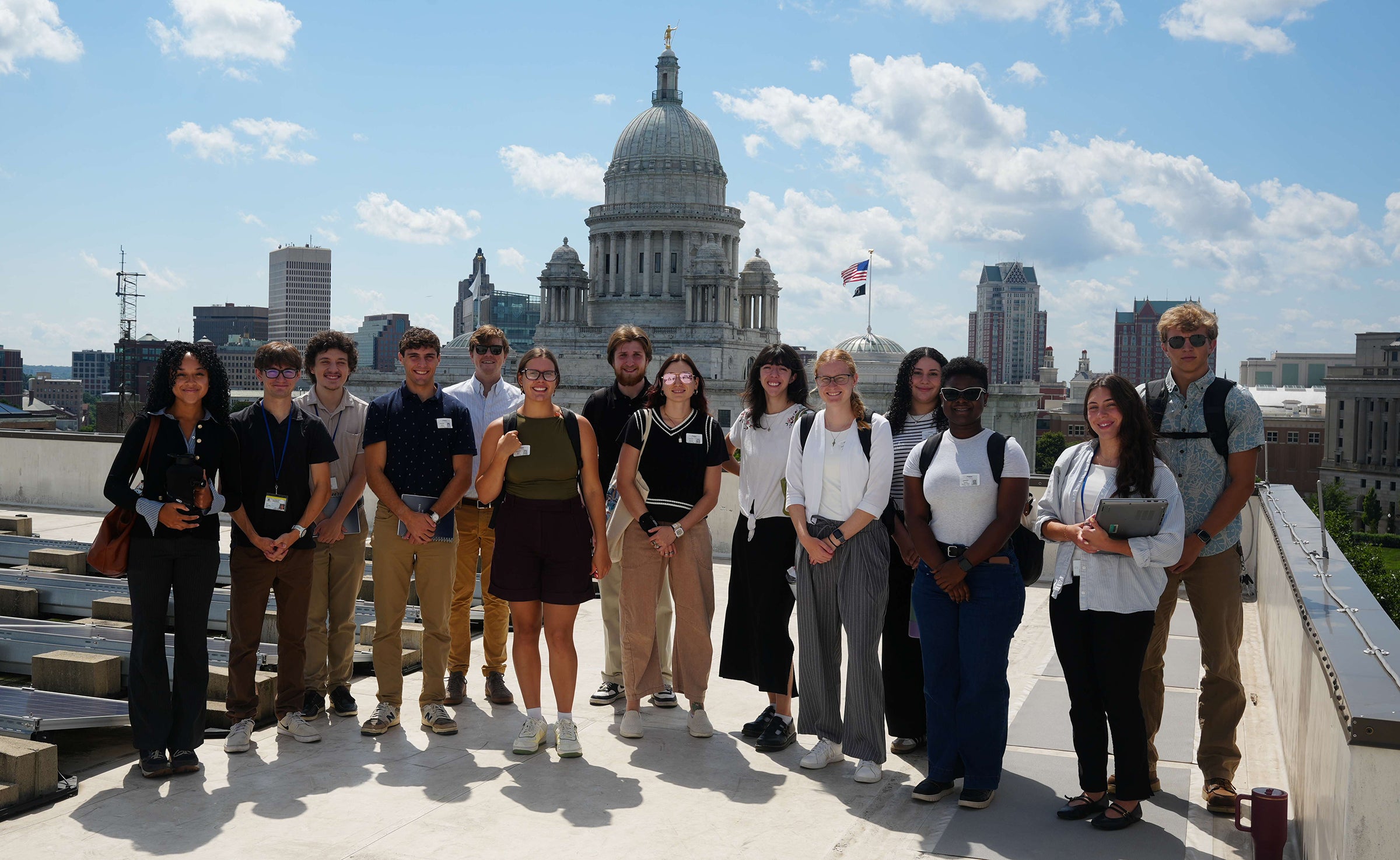
While fellows can help agency projects, students in the program are connected with industry professionals to better understand how their academic studies fit into larger field challenges, working at local businesses with local mentors.
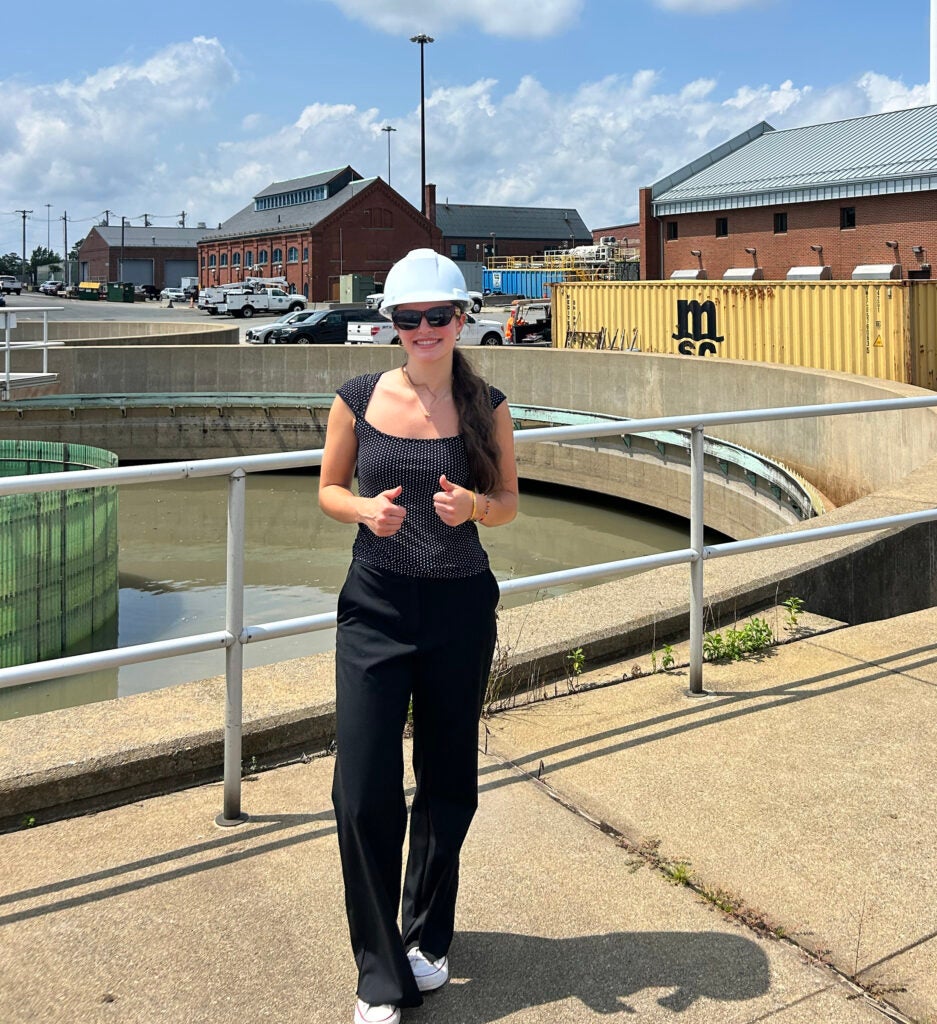
“The exposure I’ve gained from my mentors, training hosts, and Cooperative Extension staff, has shaped my journey for both exploration and decision making,” said Cailey Mingolla, a senior environmental science and management / political science major from Holbrook, Mass., who has done two fellowships, for Agriculture and Food Systems in 2025 and Environmental Management this year. Mingolla worked with Amanda Missimer in URI’s URI Department of Nutrition and Cooperative Extension to mitigate food waste in campus dining halls through diversion and composting methods and this year is working at Rhode Island’s Department of Environmental Management, focusing on communication and state mandates and guidelines around climate change in Rhode Island.
“As I near the end of my undergraduate journey,” she said, “my focus has transformed from exploration to decision making. I’ve made meaningful connections and relationships that make all the difference as I look toward securing a job I love post-grad. These experiences went beyond what could be achieved in a classroom setting, giving me opportunities to apply my knowledge through real-world experiences.”
URI Cooperative Extension Program Administrator Kate Hardesty says the Fellows program is offered to undergraduate and graduate students at URI as a way to prepare them for meaningful, impactful careers in these important fields.
“These programs honor the founding mission of the University of Rhode Island and our land grant university system, and our students are enthusiastic about being part of it,” Hardesty said. “We are always looking for program sponsors to allow us to offer broader learning experiences for students. There are a variety of ways that companies or organizations can partner with us, even if they don’t have the resources to be a full sponsor or pay students themselves. Companies can support the program by signing on as a mentor organization, or even being a site host for a summer industry training session.”
Any agency, business or organization looking to learn more about URI Cooperative Extension Fellowship programs can contact kate@uri.edu. Interested parties are also welcome to hear about some of the work of select 2026 Extension Fellows at a community showcase on Dec. 2 at URI’s Higgins Welcome Center. Learn more at uri.edu/coopext.