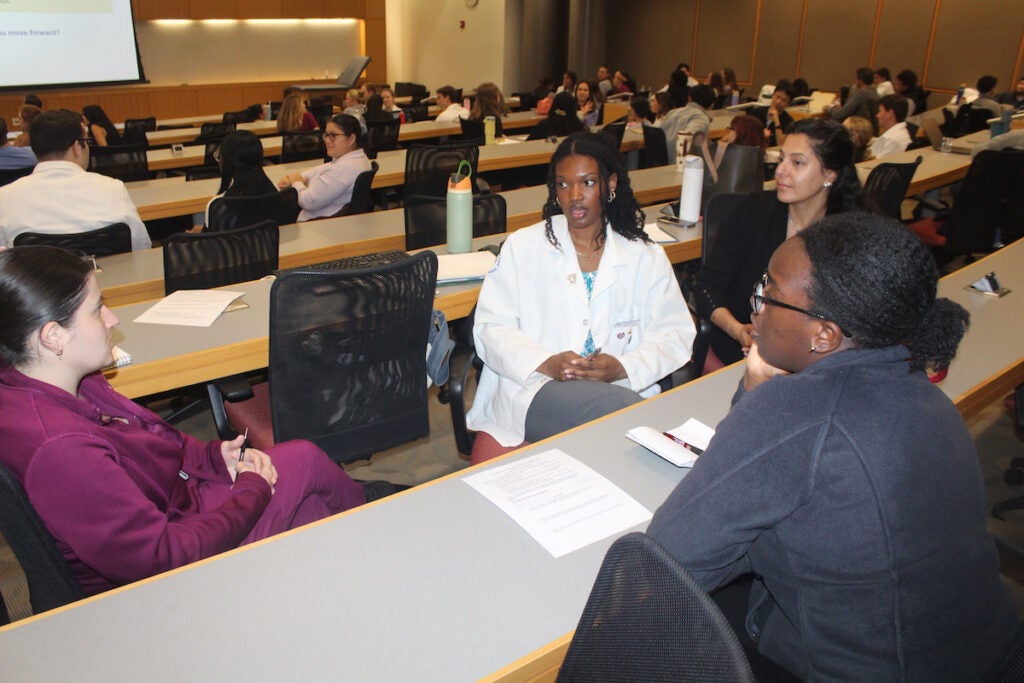
KINGSTON, R.I. — Oct. 28, 2026 — University of Rhode Island College of Pharmacy students joined medical, nursing, and social work students from other local institutions in multidisciplinary teams for a day of collaboration and patient simulation exercises during the biannual Rhode Island Interprofessional Education Day at Brown University’s Warren Alpert Medical School on Oct. 21.
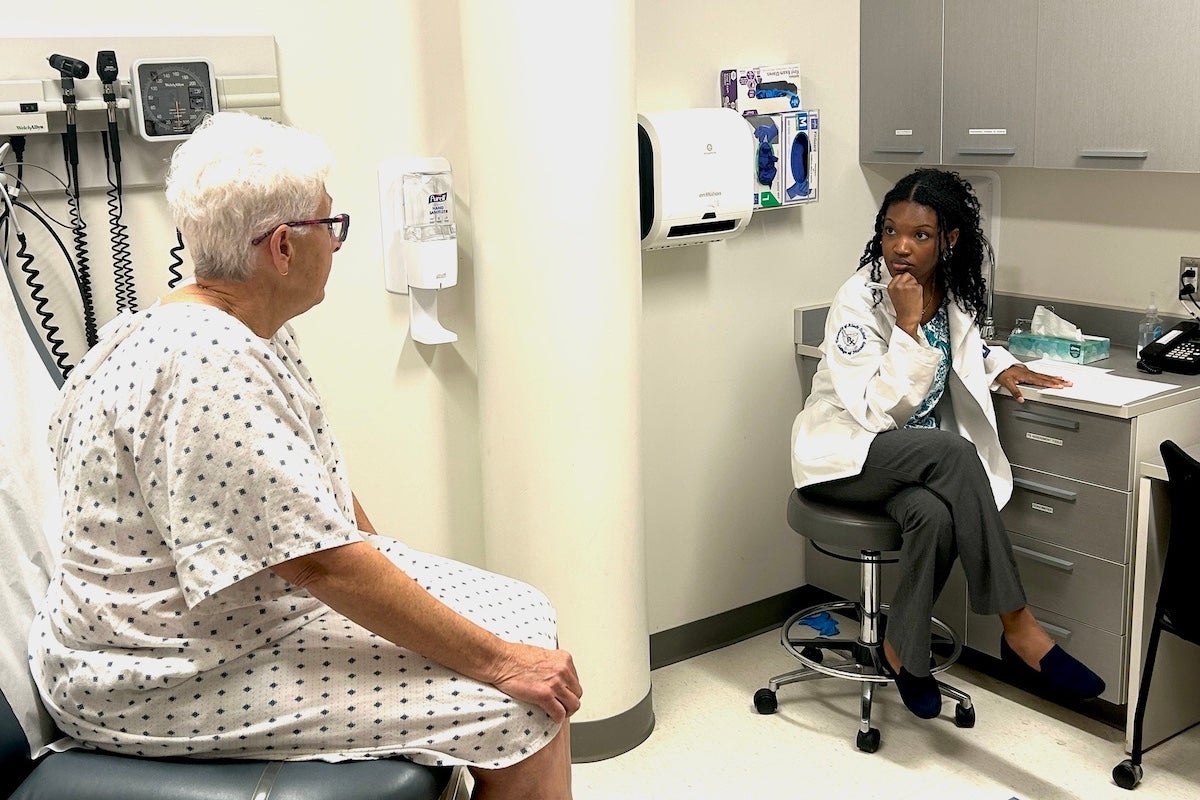
Students formed teams to assess the health of hypothetical patients played by 18 live actors who each participated in six sessions, providing 108 unique patient-student interactions. Each team—made up of a student pharmacist, physician, nurse, and social worker from URI, Rhode Island College, Providence College, Salve Regina University, and Brown—met with a patient complaining of a severe cough. Through physical assessments and conversations with the patient about her medications and her family life, the students determined she was suffering from pneumonia, as well as possible anxiety resulting from her sons’ troubling behavior.
After meeting with the patient, the students left the room to confer on a treatment plan, determining a course of antibiotics was needed, along with a decongestant to help with the cough. A social work student also provided community resources for the patient to help with her challenges at home.
“The goal is to connect students across disciplines and to equip these individuals with the skills to deliver collaborative, team-based care, which improves the health of patients in Rhode Island and beyond,” said URI pharmacy Assistant Professor Joseph Nardolillo, who served as the pharmacy lead for the initiative and coordinated the pharmacy students, who are in their third professional year at URI. The students were overseen by 31 facilitators from multiple health disciplines—including 14 pharmacists participating in the URI College of Pharmacy postgraduate teaching program—who provided feedback to the students during the simulation exercises.
Prior to the event, students were placed in interprofessional teams from multiple schools, and completed pre-work to establish foundational knowledge of interdisciplinary collaboration, and outline the structure of IPE Day. In addition to the patient care simulation, Nardolillo and Brown professor Serita Warrier led the students in a series of group exercises focused on approaches to patient care. In addition to teaching interprofessional teamwork and communication, the workshops also focused on important healthcare topics such as social determinants of health and access to care.
“At a time when communities across Rhode Island and the country are struggling to access healthcare, we must prepare future professionals to use the full strength of the healthcare team,” Nardolillo said. “IPE Day allows students to experience a model of care in which pharmacists, physicians, nurses, social workers, and physical therapists value one another’s expertise, and work together to make healthcare more accessible.”
About 500 students participate in at least one IPE Day each year, and most students take part in two events as part of their course curriculum. Since its inception nearly 20 years ago, almost every student in the represented programs has participated in an IPE Day.
“IPE Day gives students an opportunity to learn with, from, and about other professions before they begin working alongside one another in the real world,” Nardolillo said. “By bringing students from different professions into the same room for hands-on learning, we help them recognize each profession’s unique strengths, identify meaningful areas of overlap, and experience the collaboration required to deliver high-quality care.”