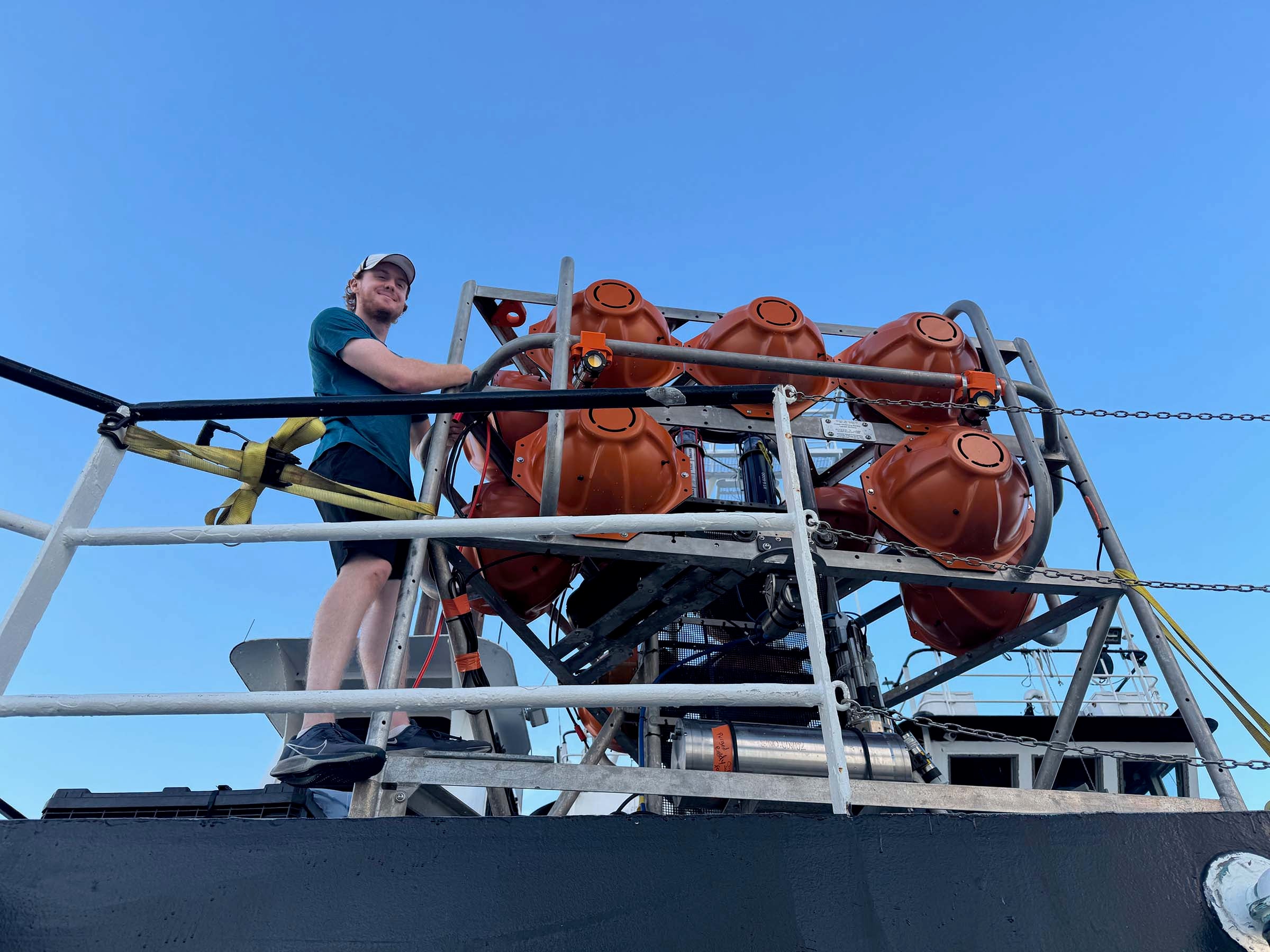
KINGSTON, R.I. – Oct. 20, 2026 – Lewis Truckel, a rising junior at the University of Rhode Island, didn’t expect a Yes, but asked the question anyway. And that first step led him to a somewhat surprising place, about 100 miles offshore in the Gulf of Mexico, studying a vital ecosystem.
A marine biology, aquaculture and fisheries science major from Michigan, Truckel and his professor Andrew Davies say that connecting directly with faculty have helped him chart his course — and other students can do the same.
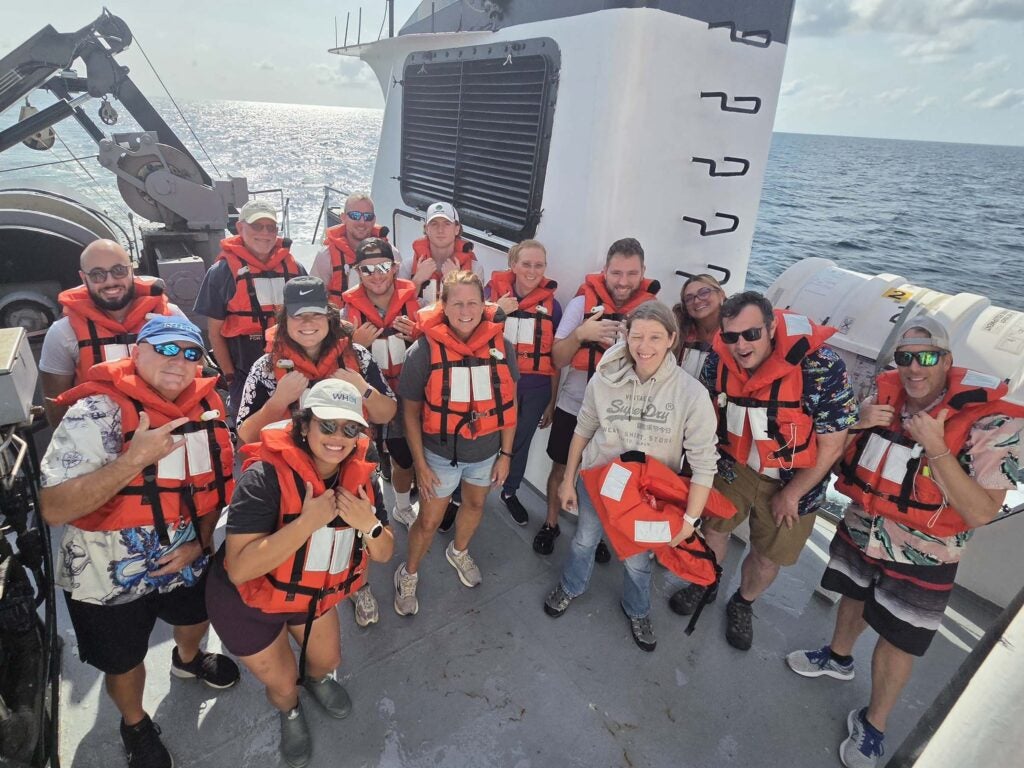
Recently returned from the research cruise he gave Truckel the greenlight to join, Davies, a professor of biological sciences, said, “It’s clear Lewis’ experiences have been transformative. This really points to the value of experiential learning, a major component of our STEM programs at URI.”
The research cruise Truckel joined, examining aquatic life in the Gulf of Mexico, was conducted in support of the NOAA-led Deep Sea Benefits project sponsored by the Open Ocean Trustee Implementation Group, a group of federal agencies that coordinate restoration efforts in the Open Ocean Restoration Area following the 2010 Deepwater Horizon oil spill. The project is a collaboration with ongoing restoration work implemented under the Mesophotic and Deep Benthic Communities portfolio which Davies has been involved with since 2022, also funded by the Open Ocean group. These projects are examining faunal abundance in the offshore Gulf injured by the oil spill.
Davies and Truckel flew down to Gulfport, Mississippi, this July, building the benthic lander in a 115 degree heat index. Once at sea, they made three successful deep-sea deployments and retrievals, collecting hours of video and images from the seafloor which will now be analyzed on land; Truckel will get to help with this, too.
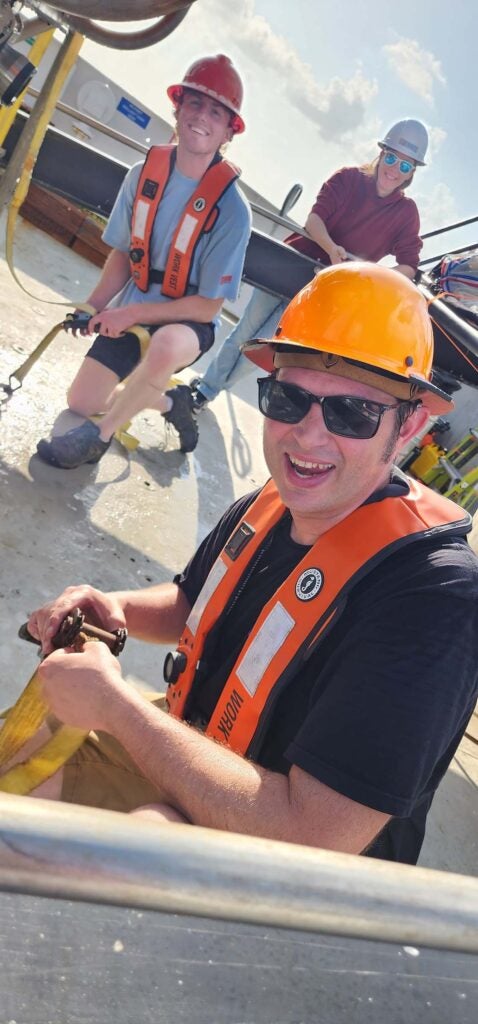
Truckel quickly became a key part of the expedition. Davies said, “He had just the right amount of enthusiasm — not afraid to ask questions but not so excited we couldn’t get anything done.”
Landing an opportunity
Truckel’s path to the sea began when Davies advertised a need for undergraduate researchers in his Marine Biology class last fall. Truckel applied and was accepted to work as a data/image analyst in Davies’ Marecotec Lab. He became fascinated by the lab’s unique blend of marine biology and engineering, did volunteer research for credit in the spring, and applied for a URI Summer Research Fellowship. This summer, he worked at URI’s Narragansett Bay Campus helping prepare oceanographic equipment for deployment.
But setting out to sea and being a part of a small floating science island gathering critical data this summer was an entirely different experience. Truckel took the initiative and asked the question anyway — if he could go beyond the lab and into the field — to find himself in the Gulf, playing a key role in this important research expedition.
Davies says that Truckel took to the work like, well, a fish to water. “He just threw himself into learning and life on the ship,” said Davies. “I think this shows how powerful experiential learning is and how it builds confidence and capability in our students.”
“It is a rare thing to see such a young scientist simultaneously exhibit such high levels of poise and enthusiasm,” said cruise leader Tracey Sutton, director of the DEEPEND Research Consortium at Nova Southeastern University. “There seemed to be nothing Lewis couldn’t handle. He’s welcome on my cruises anytime.”
Truckel says that working with Davies in his Marecotec Lab helped him build independence and self-sufficiency, learning to take initiative and figure things out for himself.
“I was pleasantly surprised when Dr. Davies was open to letting me come along,” he said. “I’ve become a lot more comfortable working with scientists in a research environment and this experience has undoubtedly solidified my desire to pursue research in the future. Being able to contribute to research that has actual, tangible impacts on the world has been an amazing experience.”
Truckel says students shouldn’t be afraid to take that first step to connect with faculty for hands-on research.
Research benefits
Davies and other faculty encourage their students to consider taking a student job or work study for research credit. Building skills lets students prove themselves, he said.
Some students have the confidence to ask about and pursue opportunities coming into URI; others are more reserved. But Davies says students shouldn’t be afraid to ask.
“When we say this in class and talk about research,” Davies said, “we mean it. Many students don’t know that they can connect with us this way.”
He says doing so is also easier than students think: “Just look at the classes and professors that stand out for you and reach out to ask if they have any lab opportunities. If you don’t hear back, try again or try someone else.”
Davies knows the value of such work — in fact, he says such experiences led him where he is at URI today.
In his first year of college in the UK, Davies’ class had a visit from the curator of a local natural history museum in need of some help. “I thought, ‘this sounds cool,’” Davies recalls, and went. He ended up staying for two-plus years, cataloging the museum’s bird collection and building its database. Working there gave him experience and a confidence boost and eventually put him on the path to a Ph.D.
“Twenty years later, I can say without those two years in the museum, I wouldn’t be where I am today,” Davies said. “I was a different person then — a shy guy lacking in confidence. That experience helped me find my footing with research and eventually led me to branch out beyond a small town in North Yorkshire in the UK.”
“It flipped a switch,” Davies recalls. “I went from being an average student to a good student. That experience is really where my love for research came from. It helped me find direction and launched my career.”
Now on the other side of the equation, he says that students should not discount the value they bring to University research: “They offer something new to the lab, ask insightful questions and spur on new avenues of inquiry,” said Davies. “We are a research institution and rely on and value undergraduate students. Don’t hesitate to make a connection with your professors or assume the answer will be no.”