KINGSTON, R.I. – Oct. 23, 2026 – A University of Rhode Island professor with a global portfolio of work and a marine research associate in URI’s Coastal Institute are joining a multi-million dollar project funded by the U.S. Department of State, utilizing their expertise in international fisheries.
Professor Austin Humphries, Chair of URI’s Department of Fisheries, Animal and Veterinary Sciences, and Lauren Josephs M’17 in the University’s Graduate School of Oceanography are part of a team recently awarded a State Department grant in a project being led by Mississippi State University. The award is up to five years with up to $8 million in the first year.
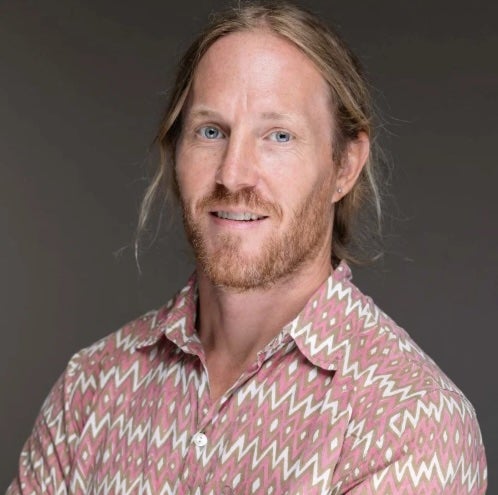
A fisheries scientist, Humphries studies how ocean health and human well-being are linked. He’s led interdisciplinary research across Africa, Southeast Asia, and the Pacific. His research programs have attracted more than $150 million in collaborative funding. He and Josephs are teaming up to implement research that engages policy-makers to curb illegal fishing.
Humphries will lead the marine fisheries component of the project, as part of MSU’s Feed the Future Innovation Lab for Fish to advance research and innovation that strengthens global aquatic food systems while creating benefits for U.S. agriculture, industry, and food security. The project will be managed by MSU’s Global Center for Aquatic Health and Food Security and builds on the previous Fish Innovation Lab, which supported multidisciplinary research in 10 countries.
The new Fish Innovation Lab will focus on solutions that can move from development to practice, including opportunities to open international markets for U.S. products and technologies, and strengthen the protection of U.S. aquaculture from emerging disease and biosecurity threats.
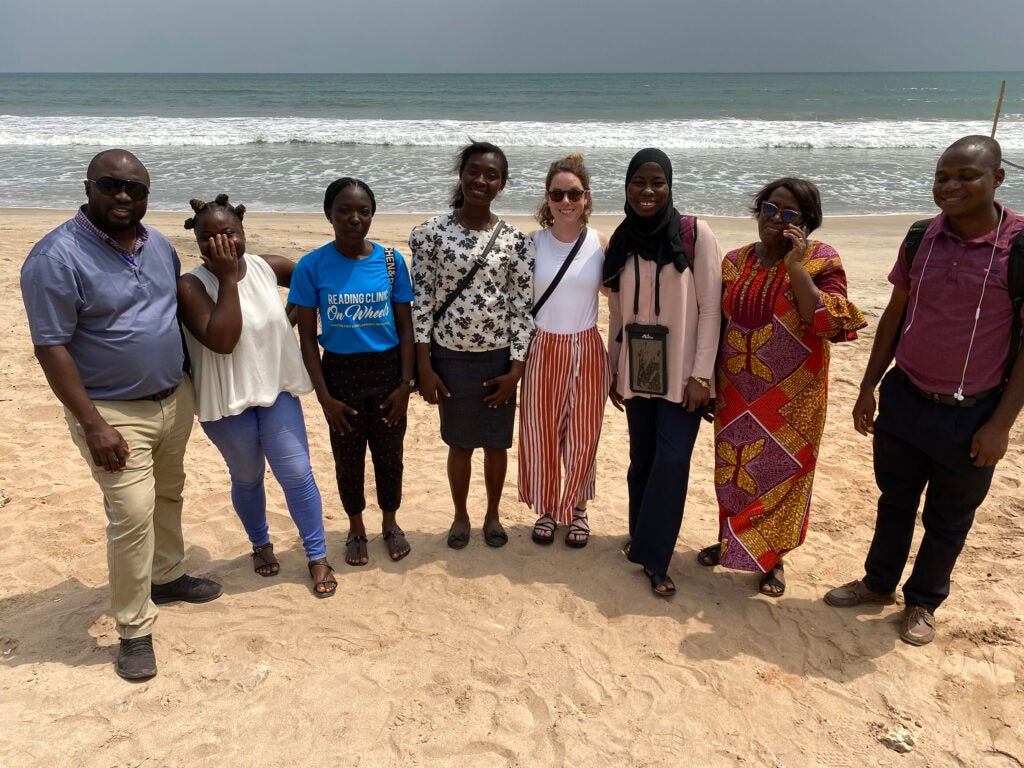
Humphries and Josephs have previously worked on State Department-funded projects, including Fish Right, URI’s Philippines program led by Elin Torell in URI’s Graduate School of Oceanography. He also has a pending Fulbright Fellowship in Portugal in 2027.
“The Fish Innovation Lab work will leverage the expertise and infrastructure that the Fish Right project has developed under the leadership of GSO’s Elin Torell and others to combat illegal, unreported, and unregulated (IUU) fishing in the Philippines,” Humphries said. “We will also be looking at ways to expand our work into Kenya and how we might utilize recent advances in AI for detection of IUU fishing in the Western Indian Ocean as well.”
Sea V
Raised in the Appalachian Mountains of Virginia, Humphries has been around fish and fisheries across the world, working as a fisherman in Alaska and spending years monitoring coral reef fish populations in East Africa and the Seychelles. He pioneered study of one of China’s first habitat restoration programs and has lived aboard vessels in remote waters of Indonesia and the Pacific Islands for months at a time. Humphries has directed more than 30 international fisheries projects worldwide and his expertise has been sought by the U.S. Senate Committee on Appropriations, where he has testified multiple times on international fisheries development.
It was in this capacity that he first met the MSU team and has collaborated with them in the past decade.
“When this new opportunity was released for proposals, it was natural to partner with MSU again,” he said, noting he’s glad to lead the fisheries components of the program that also includes a wide array of aquaculture projects. “It signals that fisheries and food security are being treated as part of a broader security and diplomatic agenda, not only as development.”
Humphries says he is looking forward to working with Josephs and partnering with colleagues at Mississippi State University and beyond to help provide national leadership in applying research to challenges that affect food and economic security worldwide. The newly funded project will conduct research into aquatic feeds, genetics and seedstock, fish health, aquaculture production, freshwater and marine fisheries, food safety, nutrition, value-added products, economics and trade, and technology transfer. The award will put emphasis on moving research into use, leveraging research and partnerships while placing greater emphasis on turning discoveries into technologies and sustainable practices that create measurable benefits in partner countries and the United States.
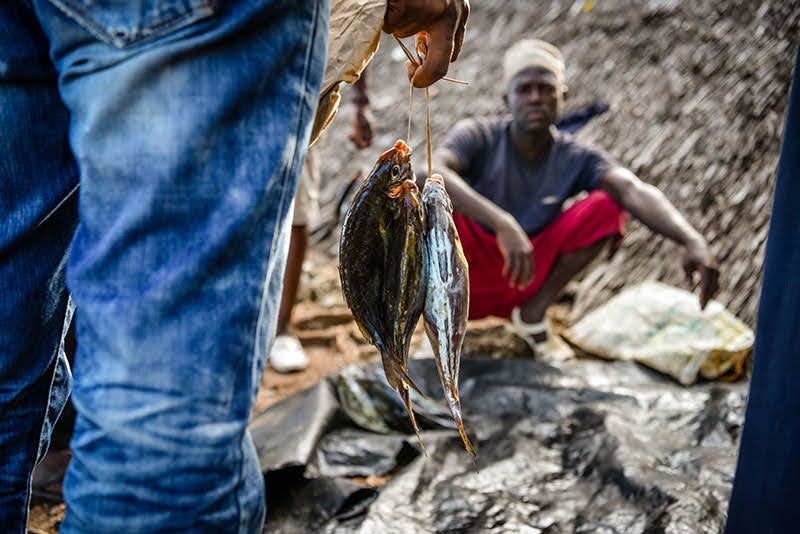
Humphries and Josephs will focus on illegal, unreported, and unregulated (IUU) fishing in the Philippines and Kenya using AI and vessel-tracking data to detect when distant-water fleets push into the waters small-scale fishers depend on. They have worked together for over 10 years on various projects worldwide.
“This project connects fisheries science directly to food security and to the livelihoods of coastal communities,” said Humphries, whose research group recently published a paper on distant water fishing and its effects on domestic food security in NPJ Ocean Sustainability. The paper examines distant water fleets as a threat to ecosystem health, domestic economic opportunities, and food security for countries around the world.
Feeding the future
Humphries says the new Feed the Future Innovation Lab for Fish builds directly on the policy-relevant fisheries work his research group has been doing, now documenting displacement of small-scale fishers with vessel data and using that evidence to trigger enforcement.
Humphries favors integrated approaches that highlight the contributions of U.S. research institutions to solving global challenges in coastal communities around the world.
“We are fortunate to work in a culture here at URI that recognizes and rewards interdisciplinary research that addresses real-world problems,” he says. “We can offer solutions that have positive impacts for the U.S. and beyond.”