KINGSTON, R.I. – Nov. 5, 2026 – Two STEM-related University of Rhode Island research training programs continue to serve students despite the unpredictability of federal funding from the National Institutes of Health.
Originally granted in 2023, the four-year $1.1 million NIH award for URI ESTEEMED (Enhancing Science, Technology, Engineering, and Math Education Diversity) was terminated in March 2025 and reinstated in July 2025. The URI ESTEEMED program, which prepares freshmen and sophomores for careers in biomedical research and engineering, is now in its final year of funding.
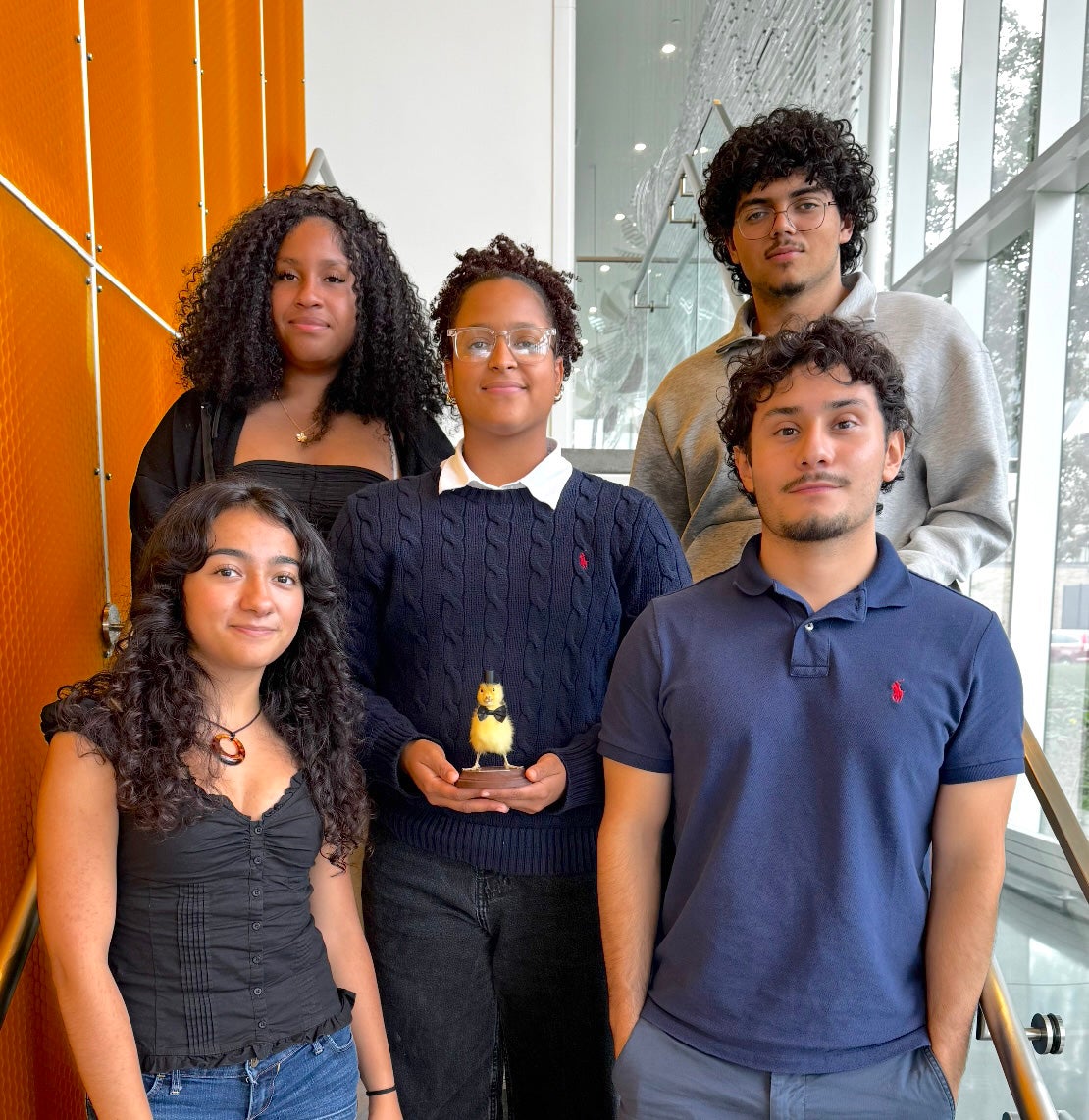
Each year, five freshmen from backgrounds usually underrepresented in STEM fields form a new ESTEEMED cohort. The students participate in seminars, one-on-one meetings with faculty, and receive professional development in areas such as research ethics, scientific communication and finding a research mentor, ultimately participating in mentored research with a URI faculty member.
Normally, when ESTEEMED trainees are in their sophomore year, they work in faculty research labs and some complete summer research experiences. However, because funding is ending, a condensed one-year track has been designed for this year’s five freshmen.
“We didn’t want to recruit five freshmen and then leave them with half a program,” said ESTEEMED principal investigator Samantha Meenach. “The condensed track gives this year’s freshmen cohort the core of ESTEEMED in one year, including seminars, professional development, and more extensive shadowing in a lab so they’re ready to keep doing research after the grant ends.”
Meenach is a professor with a joint appointment in chemical, biomolecular, and materials engineering in the College of Engineering, and biomedical and pharmaceutical sciences in the College of Pharmacy, and she’s the Victor J. Baxt Endowed chair of chemical engineering.
Meenach is also the co-principal investigator, with URI professor Niall Howlett, of the URI MARC (Maximizing Access to Research Careers) program. Howlett is a professor with a joint appointment in the College of Pharmacy and the College of the Environment and Life Sciences, and he’s the associate dean for research and graduate education for the College of Pharmacy.
URI MARC was renewed this summer by the NIH National Institute of General Medical Sciences through a five-year $1.7 million award after being without funding for two years. The program prepares juniors and seniors for graduate degree programs in the biomedical sciences.
Of the 19 MARC alumni from the program’s 2019 through 2024 cohorts, 10 students went on to Ph.D. and M.D./Ph.D. programs at Brown University, Emory University, Massachusetts Institute of Technology, Tufts University, University of Michigan, and other institutions.
“Funding gaps don’t just pause a student’s education and training; they close doors,” said Howlett. “The students who would have been in MARC over the last two years missed research training and graduate school preparation. We can’t give that back to them now.”
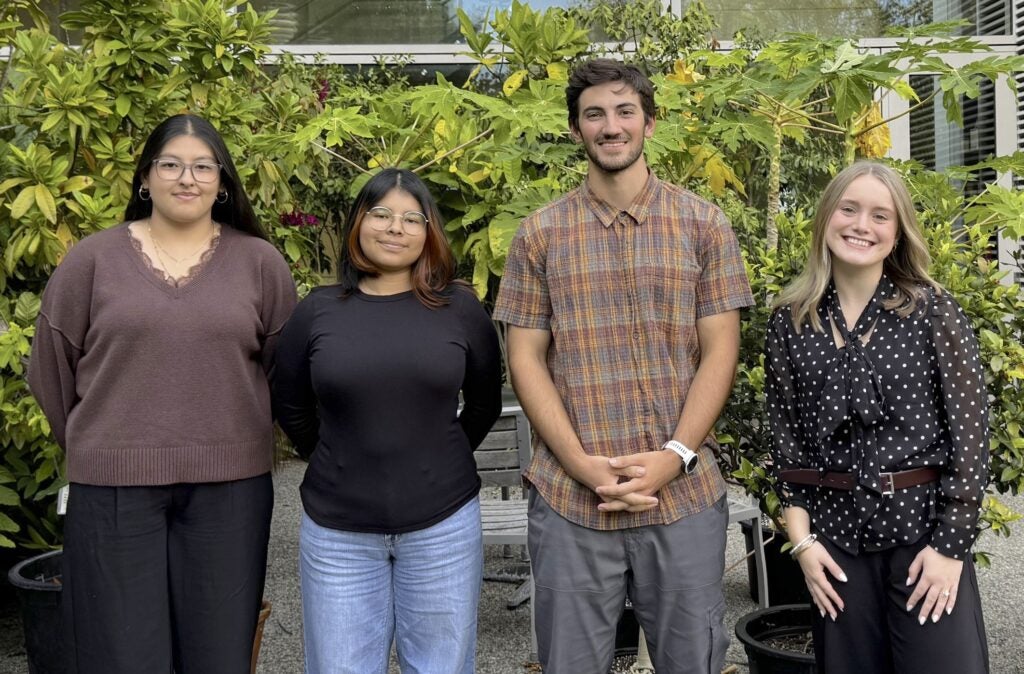
MARC returned in September with a cohort of four juniors from the College of the Environment and Life Sciences, the College of Pharmacy, and the College of Health Sciences. They will conduct two years of mentored research, receive professional development, complete a summer research experience after their junior year, and present their research at an annual spring symposium. During their senior year, MARC students will be required to apply to Ph.D. or M.D./Ph.D. programs in the biomedical sciences with direct support from the program.
“Two of our ESTEEMED graduates are in the new MARC cohort, which is exactly how the programs are designed to work together,” said Meenach. “ESTEEMED gets students into research their first year at URI; MARC carries them through graduate school applications. That continuity prepares students to transition into biomedical research-related advanced training and careers, and it only happens when both programs are funded.”
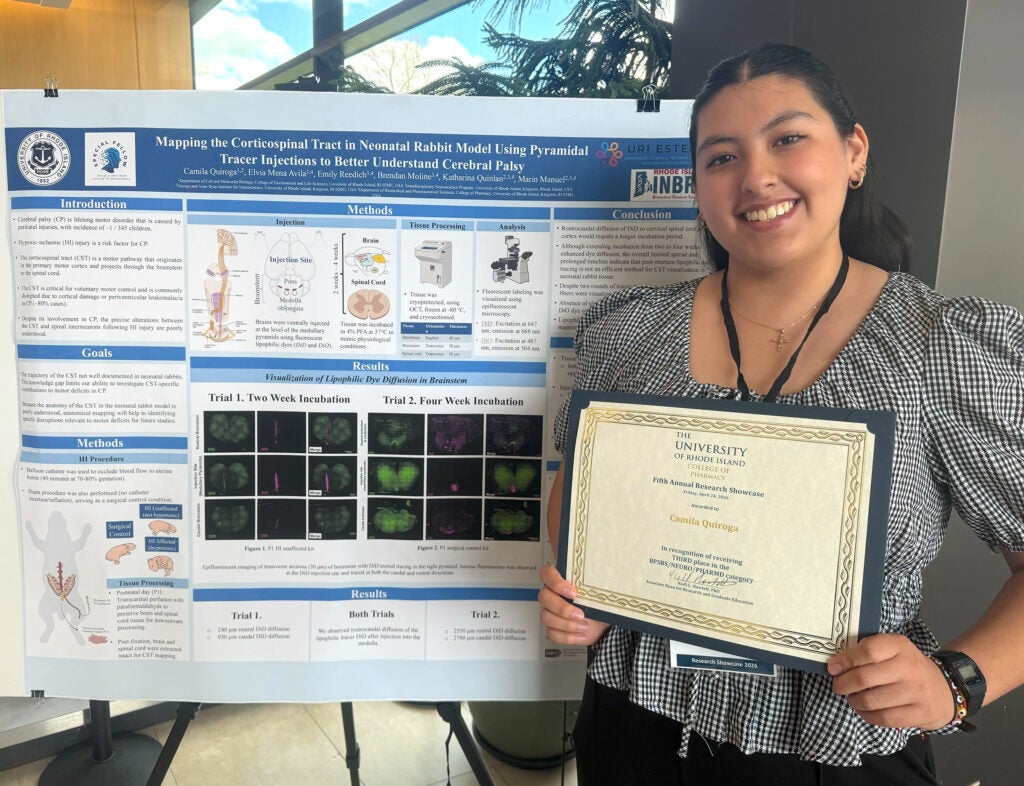
Camila Quiroga, a junior double majoring in cell and molecular biology and neuroscience, is one of the two ESTEEMED graduates in the new MARC cohort.
“I would not be where I am without the mentorship and guidance of the ESTEEMED and MARC programs,” said Quiroga, a first-generation college student. “ESTEEMED gave me the exposure to research, and MARC continues to support and prepare me for graduate school, something I would have never imagined for myself. Programs like ESTEEMED and MARC unlock student potential and interest in research in a way no lecture ever could.”
Howlett and Meenach credited program staff with keeping both programs running through the funding gaps, in particular the MARC/ESTEEMED program coordinator, Caroline Duane, who has coordinated trainee support and program logistics since 2023.