
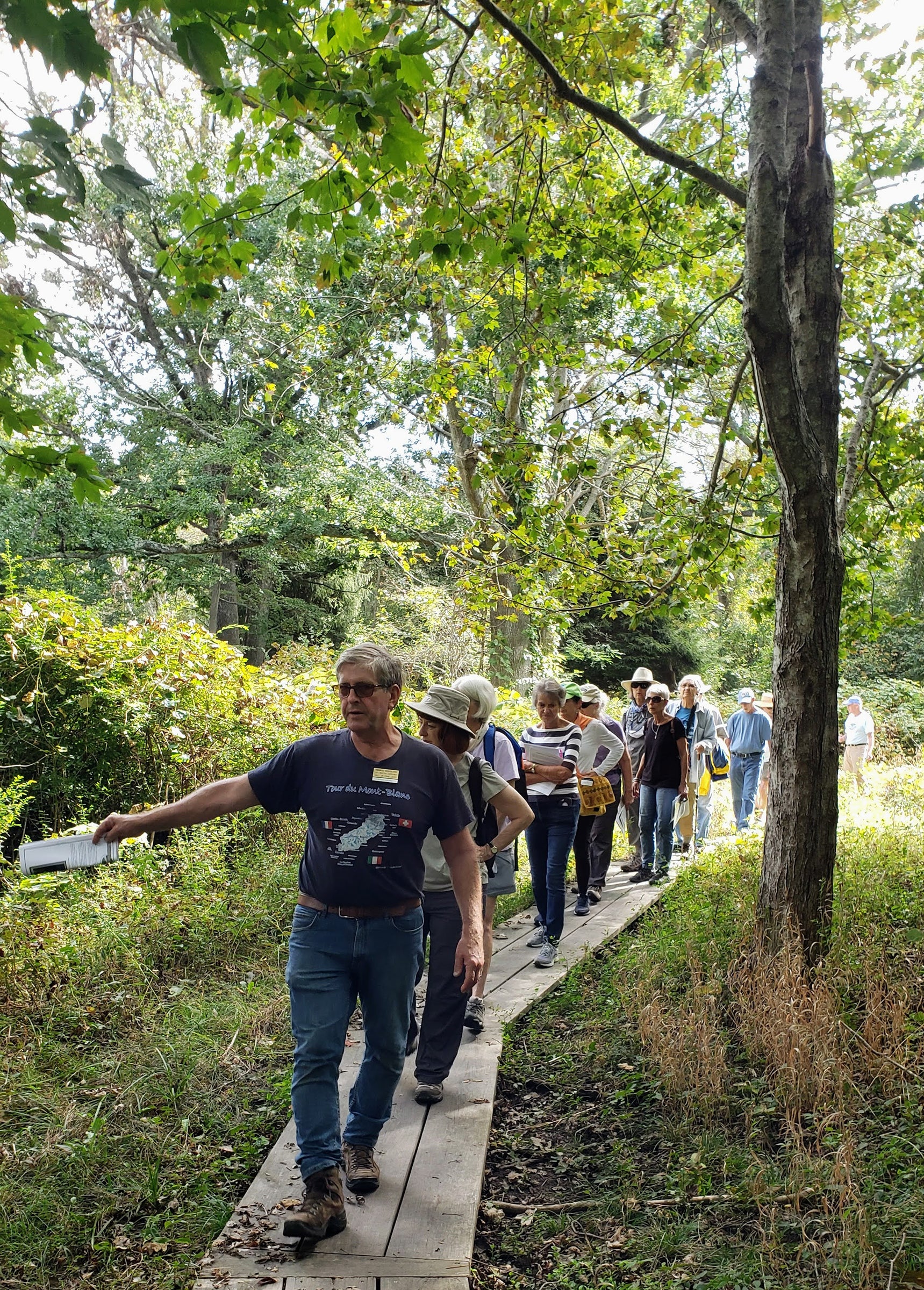
KINGSTON, R.I. – Nov. 19, 2026 – Invasive plants are a formidable environmental foe across South County and other parts of Rhode Island. Tom Hoagland, a University of Rhode Island Master Gardener, is working to minimize their impact and preserve South County’s native plants. He is President of the Friends of Canonchet Farm, in Narragansett, who say that increased effort can help minimize invasives’ impact.
Hoagland has been a member of the URI Cooperative Extension Master Gardener Program since 2010 and has volunteered around 6,000 hours since then on multiple local projects. He and a group of other volunteers at Canonchet are also graduates of URI Cooperative Extension’s Invasive Plant Management Certification Program.
A hidden gem tucked into the woods off of Boston Neck Road in Narragansett, Canonchet Farm is located on Narrow River along the shore of Pettaquamscutt Cove. Coyotes, owls, deer, fox, amphibians and snapping turtles are just some of the wildlife that call the spot home. The 174-acre-site includes forest, meadows, saltwater and freshwater marshes — and lots of invasive plant species.
The Canonchet Farm property has a rich history, once owned by William Sprague, a Rhode Island governor and senator, and long before that the lands were farmed and lived on by the Narragansett people. Canonchet was named for a famous sachem of the tribe. The town of Narragansett took ownership of the property in 1974 to preserve it as a natural space.
Canonchet is not your typical garden. “We don’t technically grow anything here,” Hoagland said, “but as we clear invasives from the property, the ecosystem responds with the growth of many native plants whose seeds exist in the seed bank but were suppressed by the invasive shrubs and vines.”
That makes Canonchet Farm a historic garden of sorts that Hoagland is happy to nurture and see grow while he spreads the word about invasives to visitors and anyone interested in learning more.
According to Hoagland, invasive plant species are a threat to the ecosystem across Rhode Island.
Invasive plants pose a threat
But other plants help provide a solution. There are some plants that the team at Canonchet Farm are trying to protect and they say other Rhode Island gardeners can do the same, to preserve and maintain native local plants such as Virginia Rose, Skunk Cabbage, High Bush Blueberry, Black Cherry, Common Winterberry, Shadbush, Smooth Arrowwood, White Wood Aster, Bayberry, and Sweet Pepperbush. These plants have established a natural ecological balance with South County’s native insects, birds, mammals and other plants, Hoagland said.
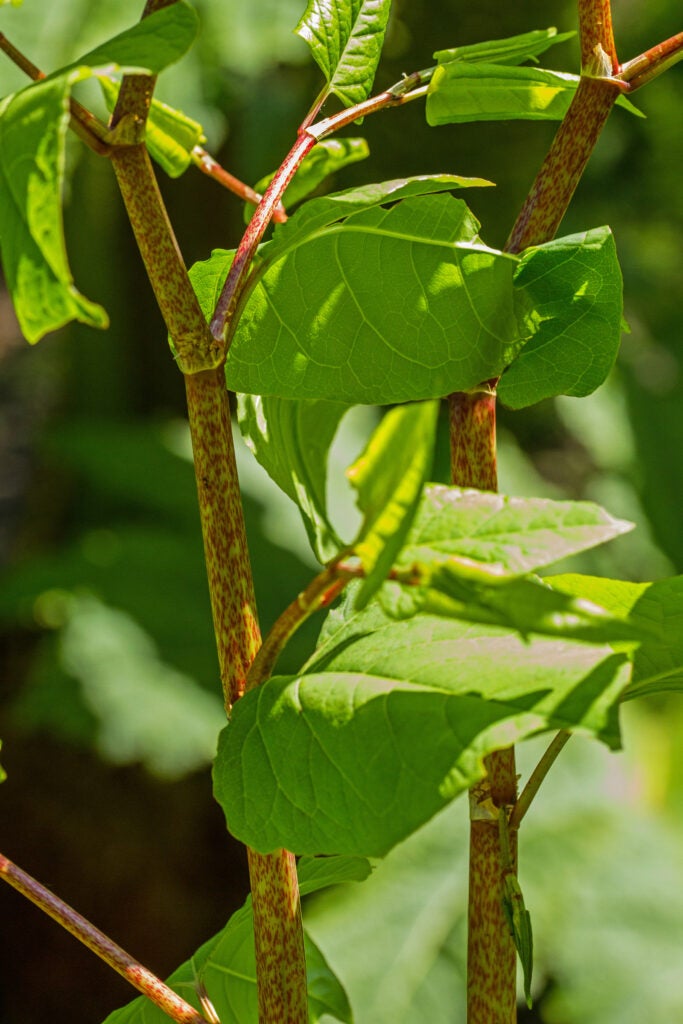
There are several invasive plant species that are considered of immediate and critical environmental impact that his organization is educating others to help remove and defeat across the state: Japanese Knotweed, Black Swallowwort, Porcelain-Berry, Garlic Mustard, Japanese Barberry, Common Reed, Asian Bittersweet, Multiflora Rose, European Privet, Burning Bush, Autumn Olive, Morrow’s Honeysuckle, and Japanese Honeysuckle.
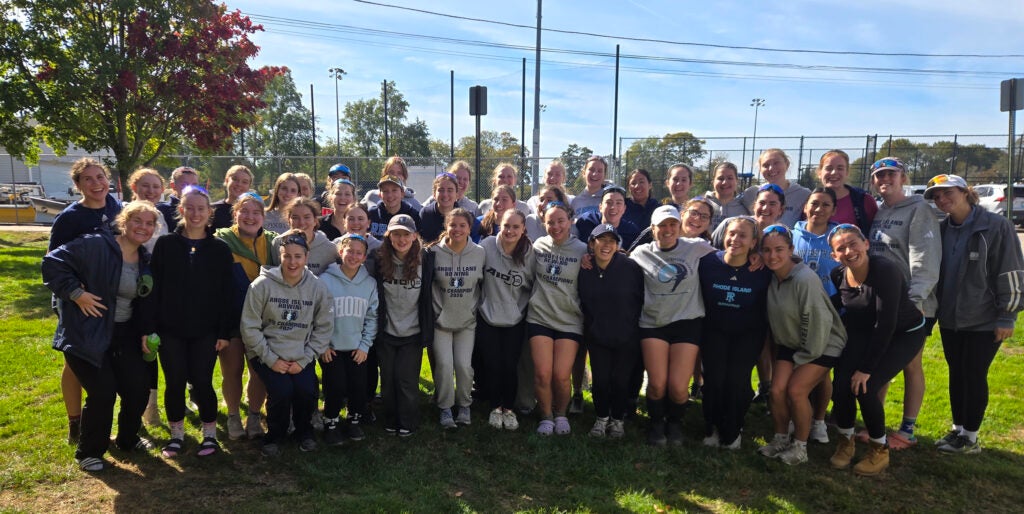
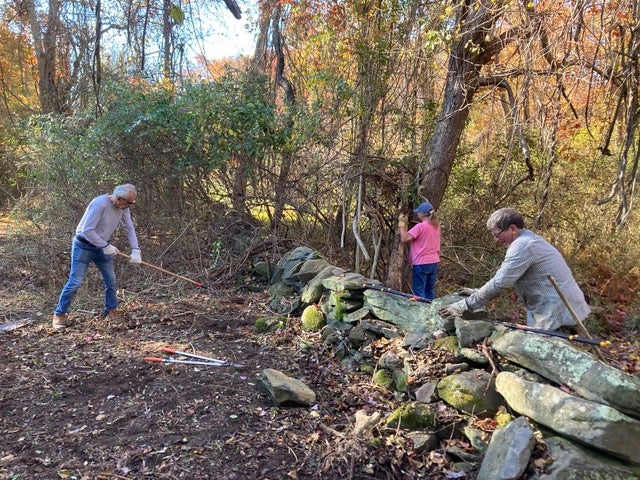
The Friends of Canonchet Farm was formed in 2007 to act as a steward for the property by the town of Narragansett. The group’s volunteers have been clearing the overgrown central Nature Trail, installing educational signage and exposing the Farm’s historic but overgrown, stone walls. A local Boy Scout troop, under the direction of the Narragansett Tree Society, began the work on the overgrown, swampy trail in 2011, while the Friends removed discarded asphalt in the beech grove near the beach entrance, removed trash dumped in the central meadow, and cleared invasives from the shorelines of the fresh water lakes across from the town beach. Hoagland’s team obtained free native trees from the Rhode Island Tree Association in Johnston, planting them in cleared areas to help in the long-term goal of preventing the invasives from reclaiming space.
Since 2023, the group embarked upon a multi-year effort to implement a vision for a Three Sisters Vegetable Garden led by Indigenous Narragansett Master Gardener leaders in a section of this historic farmland. In 2022, with a grant from the Rhode Island Foundation, a goatscaping crew of 22 goats from Harmony Farms in Coventry got to work, clearing all of the overgrown, invasive vines and shrubs from an area not far from the South County Museum and making space for the coming Three Sisters Garden. A new stone wall was erected by an Indigenous-led company, Arrowhead Masonry.
Now trail walkers can gaze across the land and see the grazing animals of the South County Museum and the new Narragansett Three Sisters Garden, illustrating the full historical range of agriculture in South County.
Hoagland partners with Indigenous Master Gardener leaders, who are leading efforts to grow food for tribal members and other families. The Three Sisters Garden is a natural outgrowth and further development of the site’s educational initiatives, Hoagland said, bringing tribal representatives to work in the garden along with Master Gardener and other volunteers, strengthening the bonds between the Narragansett tribe with their ancestral links to the land and sharing more about the area’s history with residents, visitors and trail walkers. During the fall and spring, the Friends offer educational walks and talks on subjects including natural history of the flora and fauna, identifying invasive plants, and the long history of the area.
“We conduct multiple educational walks identifying invasives and detailing mitigation efforts for our members,” Hoagland said, as well as conducting similar walks for the Rhode Island Wild Plant Society, OLLI and the Narragansett library. They also published a free booklet identifying common invasives in South County, handing them out at the conclusion of their walks and in local libraries each spring.
URI’s next invasive management class will be offered in spring 2027. To get on the Cooperative Extension email list for future programs, register online or email coopext@uri.edu. To learn about Canonchet Farm, visit Canonchet.org or the group’s Facebook page: https://www.facebook.com/friendsofcanonchetfarm.