

KINGSTON, R.I. – Aug. 18, 2026 – Now in its second year, the University of Rhode Island’s Mental and Behavioral Health Counseling master’s degree program in the College of Health Sciences is putting students on a path to becoming the next generation of mental health practitioners.
Unlike master’s programs at many other universities, the URI program provides clinical training opportunities on campus, making it convenient for students, faculty, and those seeking counseling.
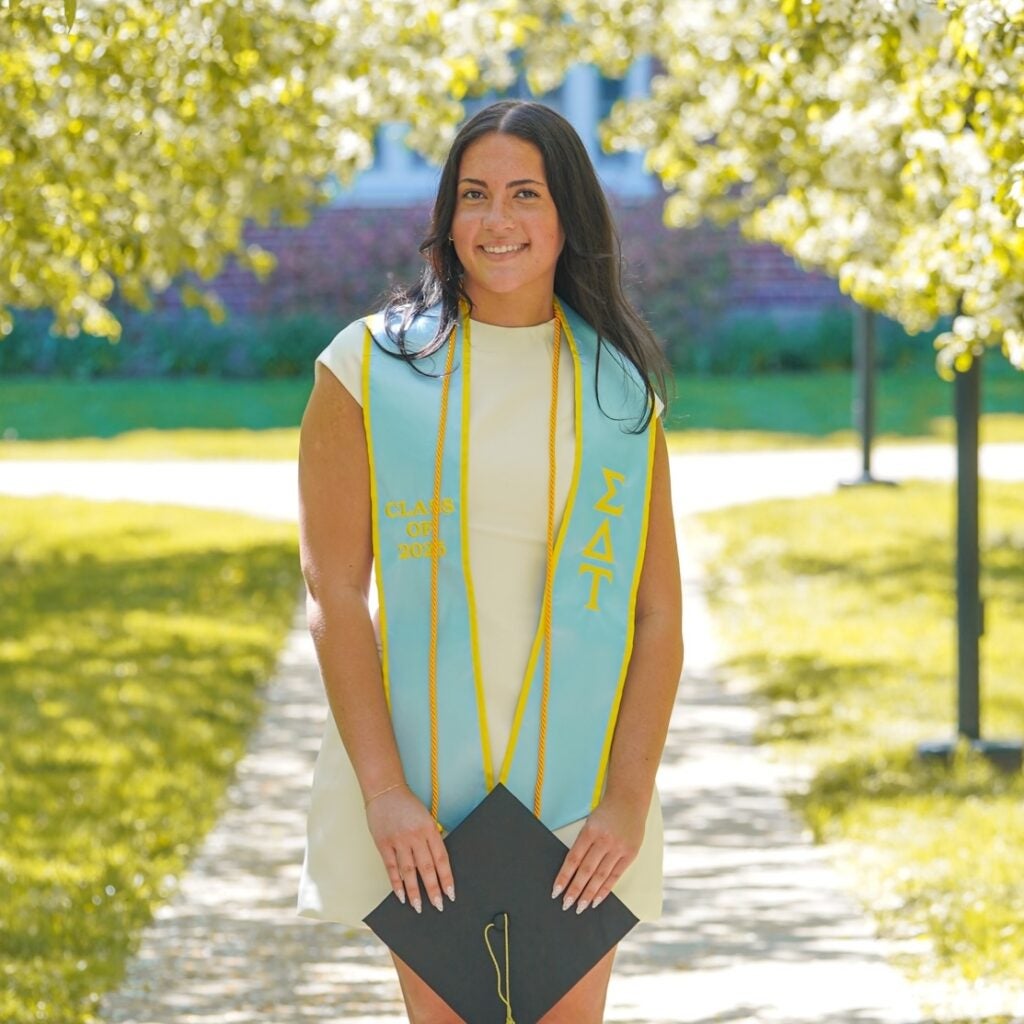
“We are uniquely positioned to utilize our campus training clinic to provide meaningful foundational training in a number of treatment modalities,” said Lindsey Anderson, director of URI’s Psychological Consultation Center. “These resources are generally not accessible to masters-level trainees, whose clinical training is most often outsourced to community settings. The clinical training opportunities on URI’s campus allows for additional oversight, and support not frequently available through other programs.”
This fall, the clinic space will be relocated and upgraded to a shared space with URI’s Couple and Family Therapy Clinic. The new location, located on the main floor of URI’s Social Science Research Center on Flagg Road, will have 13 therapy rooms, compared to the six rooms in the Center’s previous space.

“Most master’s programs do not have in-house clinics, so this space and the opportunities it provides for training are not the norm,” said Mark Robbins, professor of psychology and coordinator of the Mental and Behavioral Health Counseling master’s degree program.
According to Anderson, clinical training enables students to understand why certain approaches are taken for specific mental health issues.
“We are not interested in simply ‘pumping out’ counselors who will go into practice without the foundational and evidence-based knowledge to understand why we use certain treatments for different mental health concerns,” said Anderson. “Our ability to deliver strong training in clinical assessment and intervention exists, in part, because of access to resources such as audio and visual recordings of each session, intensive clinical supervision by our program faculty, and multidisciplinary and hierarchical learning environments.”
Tailoring experiential learning
Tayla Varan, of Cumberland, earned dual bachelor’s degrees from URI in psychology, and criminology and criminal justice. When she found out that URI would be offering a master’s degree in mental and behavioral health counseling, she was eager to enroll in the program’s first cohort in 2025.
“I always hoped to have a career that intertwines mental health and criminal justice,” said Varan. “This program sets me up with the educational and experiential requirements necessary to eventually reach my goal of becoming a licensed mental health counselor.”
Varan is especially excited that the program grants her the freedom to choose internship and practicum experiences that align with her interests and career goals. She has started a year-long internship in the Forensic Division of Rhode Island’s Department of Behavioral Healthcare, Developmental Disabilities, and Hospitals.
“I’ll have the opportunity to collaborate with fellow interns, psychologists, psychiatrists, social workers, and other professionals while assisting in competency evaluations and gaining a deeper understanding of forensic mental health,” said Varan.
In addition to her internship, Varan will continue to work as a graduate clinician in URI’s Psychological Consultation Center, where she’ll receive training and supervision in cognitive behavioral therapy.
“The mental and behavioral health counseling program’s coursework, practicum, and internship have set me up for success in the field of mental health counseling,” said Varan, who expects to complete her master’s degree in August 2027. “I’m excited to continue developing as a clinician while working toward a career that brings together my interests in mental health and criminal justice.”
Bobby Schattle, of Cranston, enrolled in the master’s degree program after earning a bachelor’s degree in psychology from Fairfield University in 2025.
“I was searching for a master’s program where I could further my education and skills in mental health counseling,” said Schattle. “URI’s Mental and Behavioral Health Counseling master’s program checked all the boxes for me. The on-campus clinic, where I can gain real experience counseling URI students and local community members while receiving supervision and feedback, was very appealing.”
Schattle hopes to work in an outpatient private practice and eventually open his own practice.
“I have a particular interest in helping folks with anxiety-related disorders, so I hope to do that and explore other areas of mental health to see what captures my passion,” said Schattle.
Becoming a licensed counselor
Upon graduation from the master’s program, students are licensed in Rhode Island as mental health counselor associates. To become fully licensed as a mental health counselor in Rhode Island requires the completion of a minimum of 2,000 hours post-graduate degree supervised counseling experience completed over at least two years. To qualify for the mental health counselor license, students must pass the National Clinical Mental Health Counseling Examination, which is sponsored by the National Board of Certified Counselors.