
KINGSTON, R.I. – Sept. 24, 2026 – Now more than ever, people regularly think about ways to change their lifestyle to support sustainability. Should society transition to electric cars? Are wind and solar really carbon neutral and will they address all of our energy needs?
Or, should one cease using plastic products?
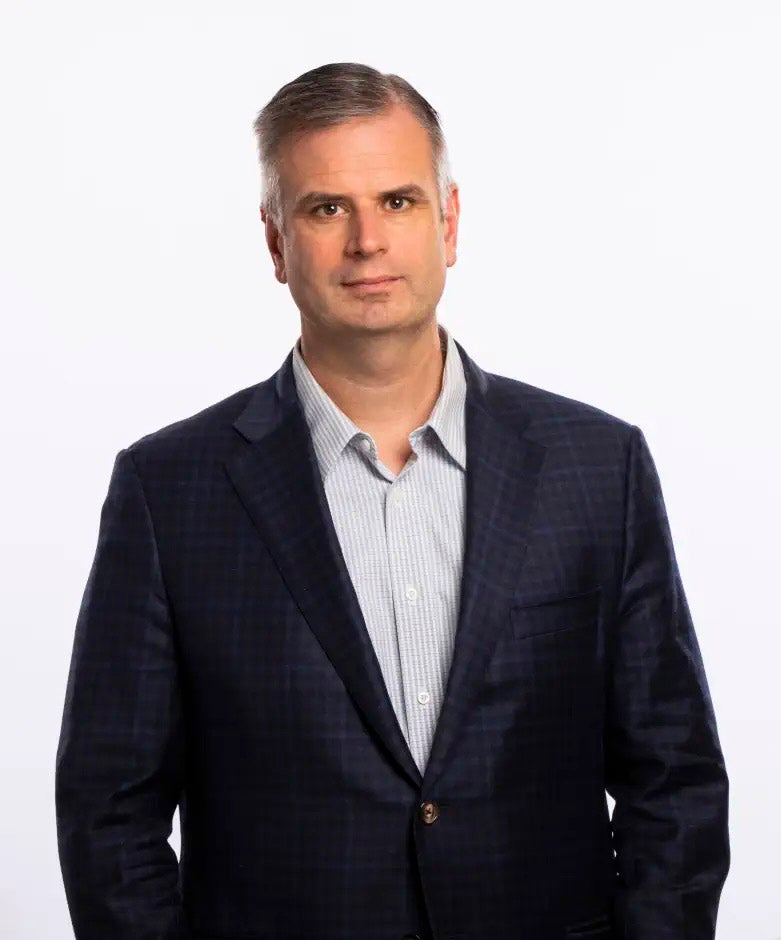
Paul Chirik, Princeton University’s Edwards S. Sanford professor of chemistry, will explore this and other questions during the annual University of Rhode Island Alexander M. Cruickshank Lecture on Monday, Oct. 5, at 5:30 p.m. He’ll explain the chemistry behind plastics and more generally hydrocarbons; the opportunities and challenges presented by recycling and what, if any, alternatives are available. Chirik’s talk, titled “Re-Imagining the Periodic Table: The Elements and You,” will be held in Room 170 of the Paramaz Avedisian Hall, 7 Greenhouse Road, Kingston.
Chirik is an inventor on more than 20 patent applications, and is a synthetic chemist with broad interests in catalysis and sustainability. The event—which is free and open to the public—will be preceded by a reception at 5 p.m.
“Climate change is an ongoing concern and we must limit its impacts, especially here in Rhode Island. Paul Chirik and his group are superstars in conducting research on how to improve our quality of life,” said Lorenzo Mosca, URI assistant professor of chemistry. “We are looking forward to Professor Chirik’s visit to URI and learning more about what we can do with the catalysts the Chirik’s group is developing.”
During his lecture, Chirik will also talk about how society needs to be more broadly focused on its “elemental footprint”—where many products enabling our quality of life, including plastics, rely on some of the world’s most exotic and scarce elements for their production. The plastics footprint has gained increased attention as accumulation of these materials in the environment has become both undeniable and a serious problem. Chirik will pose questions as to if plastics are a net positive or negative in society and whether we should ban their use.
Before joining Princeton in 2011 Chirik taught at Cornell University. There, he founded the Chirik Group, which conducts research spanning areas of organic and inorganic chemistry. The group explores “modern alchemy” for sustainable chemistry, a concept defined as using ligand design (the strategic process of creating or modifying a molecule, or a ligand, so that it binds tightly and specifically to a target biological receptor, protein, or metal center) to transmute the function of an earth-abundant metal to mimic or ideally surpass the performance of more exotic precious elements.
Among the recognitions that Chirik received for his work includes a Packard fellowship, an Arthur C. Cope Scholar Award, the Linus Pauling medal, the Rylander Award from BASF and, most recently, the Gabor Somorjai Award for Creative Research in Catalysis.
Chirik will also deliver a chemistry seminar on Oct. 5 at 3 p.m. in Room 105 in the Richard E. Beaupre Center for Chemical and Forensic Sciences, 140 Flagg Road. That seminar, titled “Catalysis with Earth-Abundant Metals: Bond-Formation in Strong versus Weak Ligand Fields,” will present Chirik Group’s work on developing catalysts with earth-abundant transition metals and understanding the fundamental organometallic chemistry of how they operate.
The Alexander M. Cruickshank Endowed Lectureship was established in 1999. It is named for Alexander M. Cruickshank, who served on the URI chemistry faculty for 30 years and was subsequently the director of the Gordon Research Conferences until his retirement in 1993. The lecture series is sponsored by the URI Department of Chemistry, the Gordon Research Center and URI’s College of Arts and Sciences.
For more information about the upcoming lecture, contact URI assistant professor of chemistry Lorenzo Mosca at 401-874-2364 or lorenzo@uri.edu.