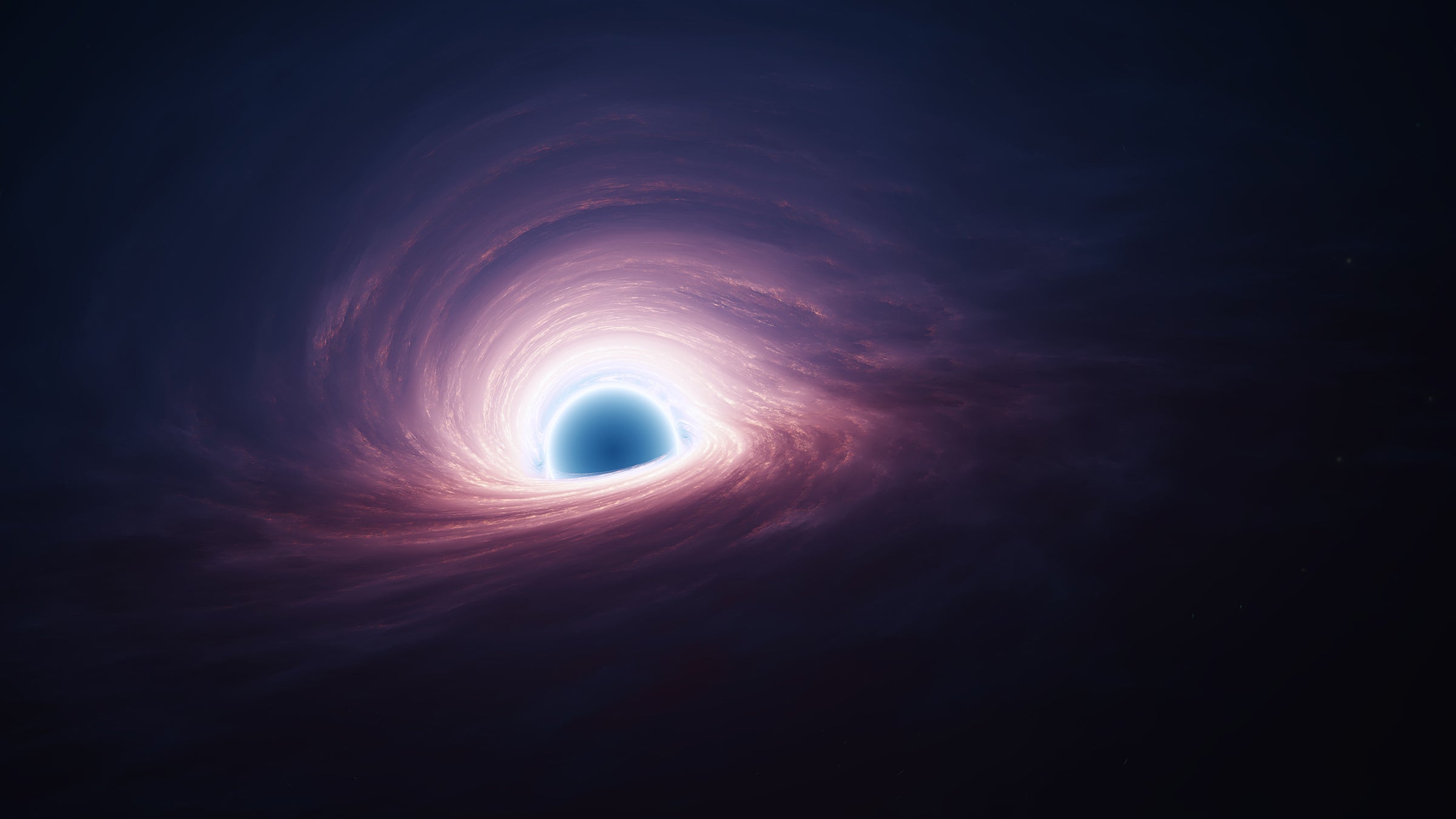
KINGSTON, R.I. – Oct. 6, 2026 – Black holes and their complexity continue to fascinate astrophysics researchers around the world, including those at the University of Rhode Island.
Researchers are drawn to how these massive, dense concentrations of energy affect their surroundings and want to learn more about how the universe as a whole was shaped by them billions of years ago. Now, two professors in URI’s Department of Physics are diving deep into understanding more about how outer space was molded by black holes, thanks to individual grants they received from the National Science Foundation.
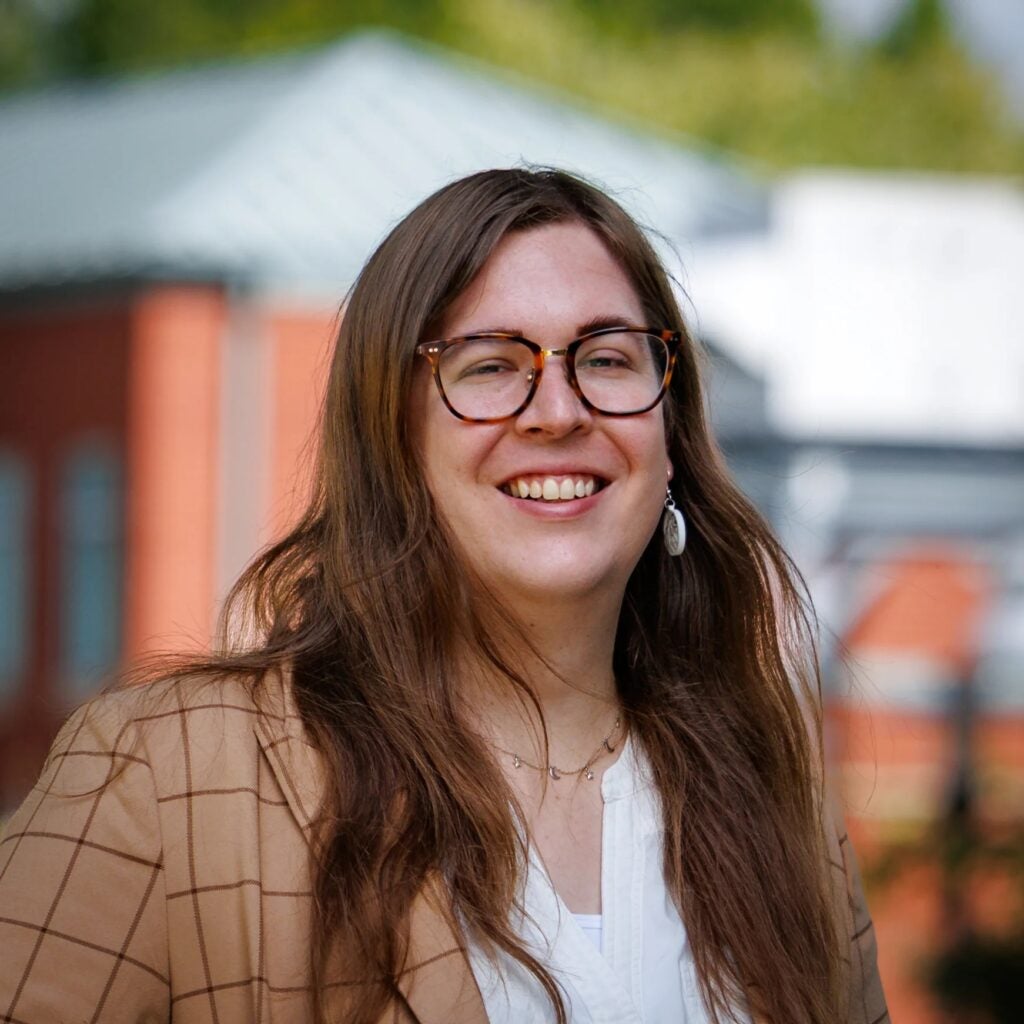
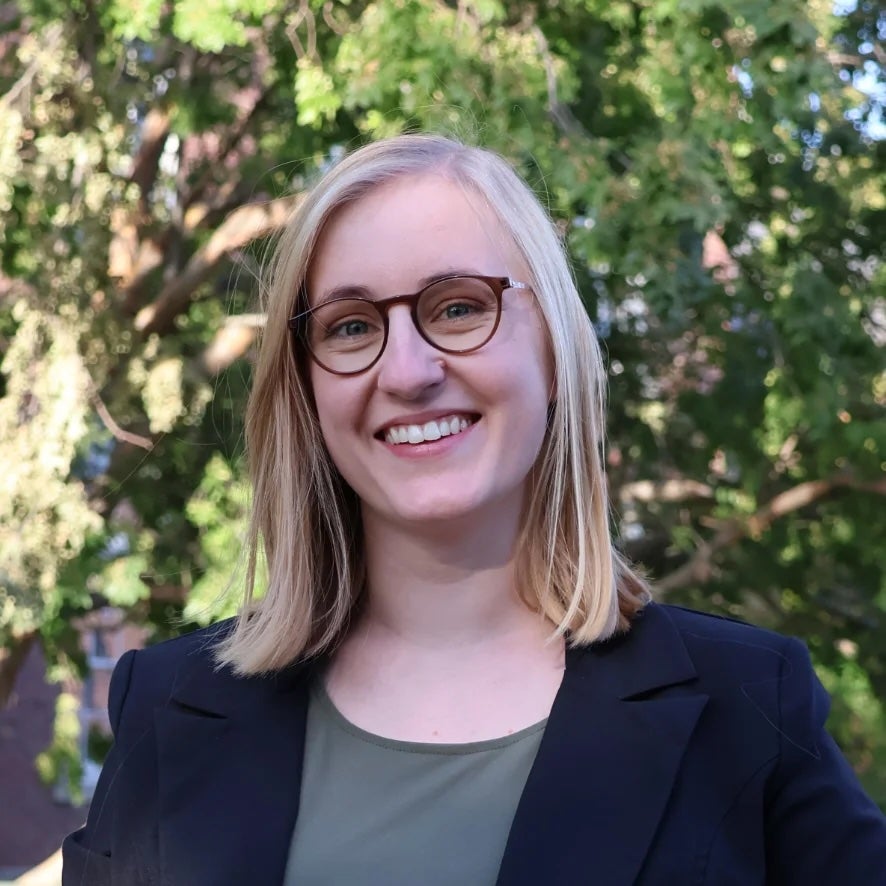
Derek Davis, a physics professor in the College of Arts and Sciences, received a $260,886 NSF grant to be used over two years. The award, through NSF’s Established Program to Stimulate Competitive Research Fellows (EPSCoR) project, will promote collaboration between URI and the Laser Interferometer Gravitational-Wave Observatory (LIGO) in Washington state to help improve researchers’ ability to detect black holes. Similarly, physics professor Deborah Ferguson was awarded $150,000 over three years to understand how black holes work and to help establish a waveform database to accurately identify black holes existing in outer space.
“I’m really excited to work with Deborah and the synergy we have on how we’re approaching the problem,” Davis said. “There are a lot of similarities about the work we’re doing surrounding black holes and we have the exact same goals. Deborah’s group is focusing on what we are actually seeing and making predictions about what we can do, and my group is focusing more on actually making those discoveries.”
Ferguson and Davis have been studying black hole phenomena extensively at URI. Last year, they were part of an astrophysics team at the University whose work helped LIGO identify a few hundred gravitational wave signals—a project that was spotlighted by CNN.
Davis’ award will support travel for them and a URI graduate student to visit LIGO and collaborate with researchers there to develop new methods for LIGO’s gravitational wave detections, allowing the machinery to find these black hole waves more clearly without outside noise interfering. At LIGO, Davis and the student will help run on-site tests, including playing music on speakers, to see how the laboratory detectors respond while operating.
The work will also include studying stellar remnants—dense, compact core objects left behind after a star exhausts its nuclear fuel and reaches the end of its life cycle—to paint a better picture of how the universe evolved over time via black holes.
“The ultimate goal is for us to see more signals and see them more clearly,” Davis said. “By removing these different noise sources, it’s kind of like cleaning off the fogginess of your glasses to have a lot sharper vision of these actual signals themselves to improve the types of astrophysics that we’re doing.”
Ferguson will be using “numerical relativity,” which is using computers to solve Albert Einstein’s equations, to simulate how black holes merge and what the gravitational waves will look like. That includes the challenge of better understanding the parameter spaces that describe the black holes, which are not always symmetrical, Ferguson said.
Building a database of clear gravitational waves would be something akin to a “Shazam” for black holes, Ferguson said, allowing researchers and scientists to better understand which black holes merged, their sizes and the masses they created.
“This is giving us a whole new way of looking at black holes and neutron stars in a way that we weren’t able to before,” said Ferguson, who will also have a URI graduate student conduct research for her grant-funded project. “From there, we can start to understand questions about how abundant they are, and what their masses and spins are like. That will tell us things about how galaxies evolve, how the universe got to where it is today.”