
KINGSTON, R.I. – Oct. 13, 2026 – As spaceflight continues to evolve, direct energy propulsion for interstellar exploration—or DEEP-IN, which uses photonic laser propulsion to propel spacecrafts into outer space—could be a gamechanger for humans to travel into deep space.
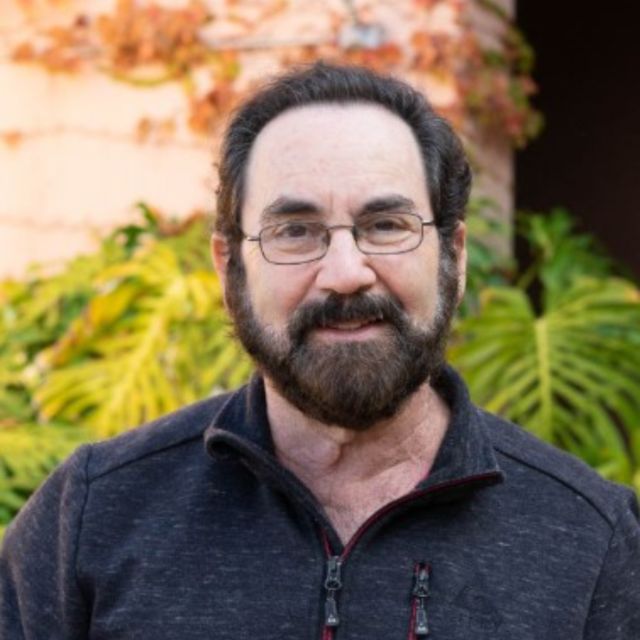
Philip Lubin, a physics professor at the University of California Santa Barbara, will explain how transformative DEEP-IN can be for space travel in his University of Rhode Island Honors Colloquium lecture on Tuesday, Oct. 20. Lubin’s talk, titled “Directed Energy for Relativistic Propulsion,” will discuss paths to relativistic flight using DEEP-IN, and its transformative implications for exploring our solar system and beyond.
Hosted by the Honors Program, URI’s premier lecture series examines the science of outer space. Lubin will speak at 5:30 p.m. at Edwards Hall on the Kingston Campus as part of the fall colloquium series, “Interstellar Exploration: Journey Beyond Your Limits.” Lubin’s talk will also be livestreamed on the colloquium’s website.
Lubin’s research focuses on studies in the early universe in the millimeter wavelength bands, applications of directed energy for planetary defense and propulsion, and multi-modal planetary defense using hypervelocity penetrators. His group has designed, developed and fielded more than two dozen ground based and balloon-borne missions, and helped develop two major cosmology satellites.
Lubin also received the Gruber Prize in Cosmology for his work in both 2006 and 2018, and published more than 500 papers.
Lubin’s lecture will be followed on Oct. 27 by Lisa Kaltenegger, astronomer and director of the Cornell University Carl Sagan Institute. A full roster of colloquium speakers and sponsors can be found on the Honors Colloquium website.
This year’s URI Honors Colloquium is led by the Department of Physics, bringing forth thought-provoking conversations that bridge cutting-edge science and the boundless imagination of science fiction. The series concludes in December with a lecture on achieving the impossible with outer space.
Hosted by the University’s Honors Program, the annual URI Honors Colloquium is free and open to the public. To see recordings of this year’s speakers, or past colloquiums, visit the Honors Colloquium Archives. Sign up here for more information and reminders for colloquium events or by emailing urihonors@etal.uri.edu.