KINGSTON, R.I. – Oct. 27, 2026 – Despite being the smallest U.S. state, Rhode Island is one of the most linguistically diverse, with more than 22% of residents speaking a home language other than English. While some multilingual learners are served by bilingual programs, the vast majority are educated in English-speaking classrooms.
To better support these students, a study launched at the University of Rhode Island this year is piloting ways teachers can work with multilingual learners, helping them to learn grade-level content and achieve English proficiency while also celebrating and leveraging the diverse languages they bring to the classroom.
Researchers at URI say this multilingual approach to learning—or translanguaging pedagogy—can improve educational outcomes and inform language education in Rhode Island and beyond.
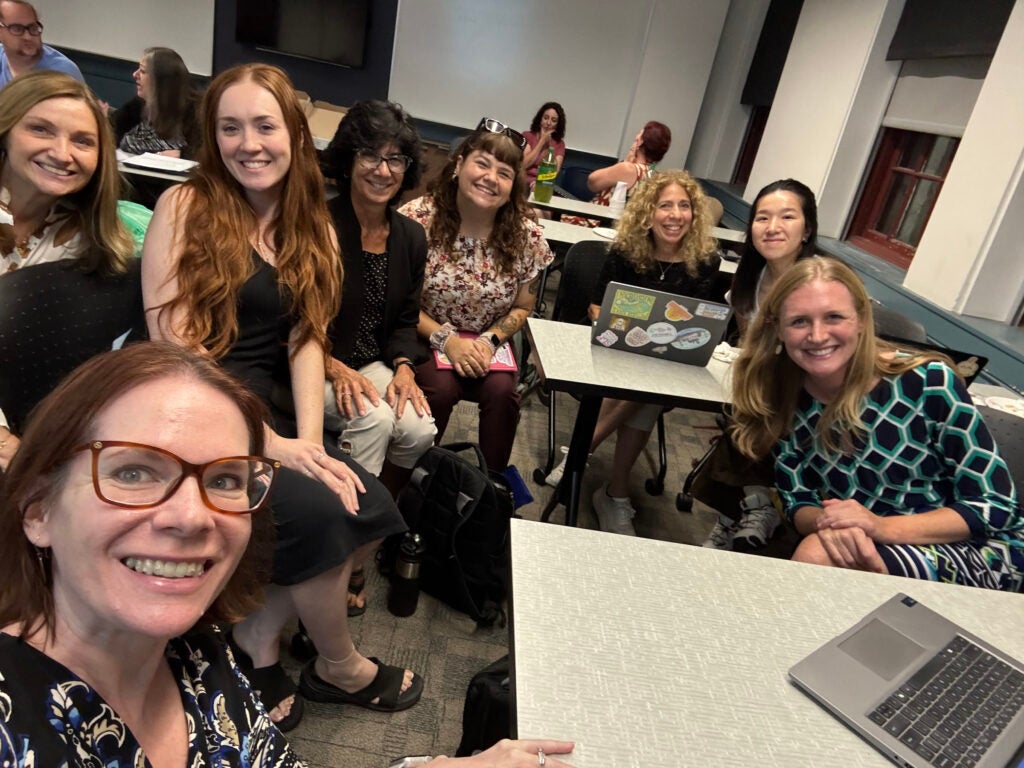
Project TRANSFORM (Translanguaging as Family-Oriented Responsive Multilingual pedagogy), a year-long professional development study with 20 teachers across four Rhode Island public school districts, launched in September. The project is run by URI’s new Translanguaging Lab—the first of its kind in the region—and is funded by the Spencer Foundation, based in Chicago.
Project TRANSFORM began in cooperation with the Rhode Island Department of Education, working with the Providence, Cranston, Woonsocket and Cumberland school districts, and is led by Nicole King and Laura Hamman-Ortiz in the TESOL / bilingual education program in URI’s Feinstein College of Education.
King says the translanguaging repertoires they are imparting to teachers can create more fruitful and welcoming spaces of learning for multilingual learners, while also connecting with their families across Rhode Island. “These strategies affirm the linguistic and cultural ways of being of our students and their families,” she said.

Rhode Island’s dense web of languages makes the state a fertile testing ground for this approach, helping to move multilingual learners to multilingual speakers.
King, who co-founded URI’s Translanguaging Lab, launched her academic career in Francophone New Orleans and began her teaching career in Louisiana. She says the idea of connecting with the background of students’ home language is necessary, and she and colleagues hope to bring a similar spirit of respect and community celebration to this new endeavor, as she found in the Creole State.
Language portraits
As Project TRANSFORM launches this year, URI researchers say the need is high for new techniques to reach multilingual learners (MLLs), the fastest-growing student population in the United States. In Rhode Island, this growth rate outpaces all other states, according to data from Rhode Island KIDS COUNT.
To better serve multilingual learners, King and her colleagues are exploring an approach that emphasizes family inclusion and honors home language and cultural practices. She says URI’s study contributes to a growing body of scholarship demonstrating that teachers do not need to speak students’ home languages to cultivate learning and belonging.
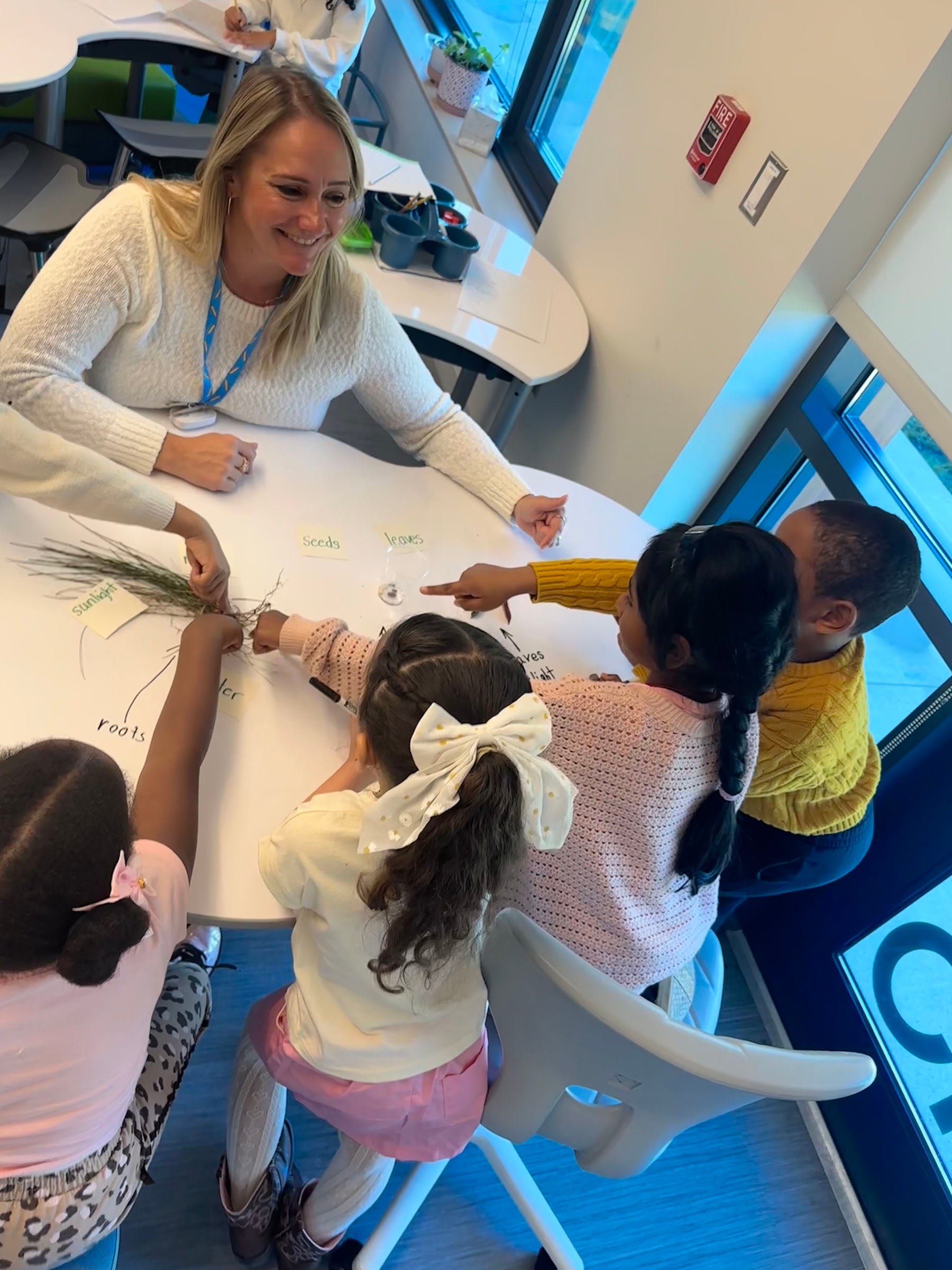
Toni Clifford M’26, a recent graduate of URI, is participating in the study. A second-grade teacher at Garden City Elementary in Cranston and a clinical (host) educator for URI education students, Clifford completed her master’s in TESOL at URI last year.
“I have already begun incorporating translanguaging approaches with my students,” she said. “It has been incredibly rewarding to see how much more confident and connected my students feel when their home languages are welcomed in our learning space.”
Ph.D. candidate Cassandra Santiago M’23 is one of the URI researchers helping teachers such as Clifford put translanguaging to work in their classrooms. Before pursuing her Ph.D., Santiago was a K-8 teacher working extensively with multilingual learners in communities with high MLL populations. She is glad to contribute to research aimed at better preparing teachers to support them.
“URI’s Translanguaging Lab has been the perfect fit,” she said. Santiago says she is excited to be a part of URI’s efforts to bring translanguaging to more classrooms around Rhode Island, helping teachers develop what the lab calls a “translanguaging stance,” a way of thinking in which teachers view their students’ multilingual skills as an asset to their learning, not a deficit. Research by Hamman-Ortiz, URI’s Translanguaging Lab director, has shown that translanguaging involving families supports language and literacy development, deepens student learning, and increases student engagement.
“When I taught first grade, one of my favorite translanguaging strategies was bilingual read-alouds,” Santiago recalled. She taught in a community where her multilingual students all spoke Spanish, so she had a variety of books that featured Spanish-speaking characters from cultures and backgrounds similar to those of the students in her classroom. The read-alouds helped build a sense of belonging in her classroom because students felt secure and proud of their language and culture.
“It was important that my students see themselves in the literature we read to foster a love of reading,” she said. “They were enthusiastic during our reading when they could connect with the cultures and characters represented in the book.”
In the spring, the first cohort of teachers participating in Project TRANSFORM will shift into the role of coach to work with other teachers in their home districts.
“I hope our work brings translanguaging into more classrooms across Rhode Island,” said Jiani Wang, a graduate student in URI’s Translanguaging Lab. “Multilingual learners bring rich linguistic, cultural, and intellectual resources to their learning and these strengths should be recognized and valued in schools.”
Email vlombardi@uri.edu to receive the Translanguaging Lab’s monthly newsletter.