
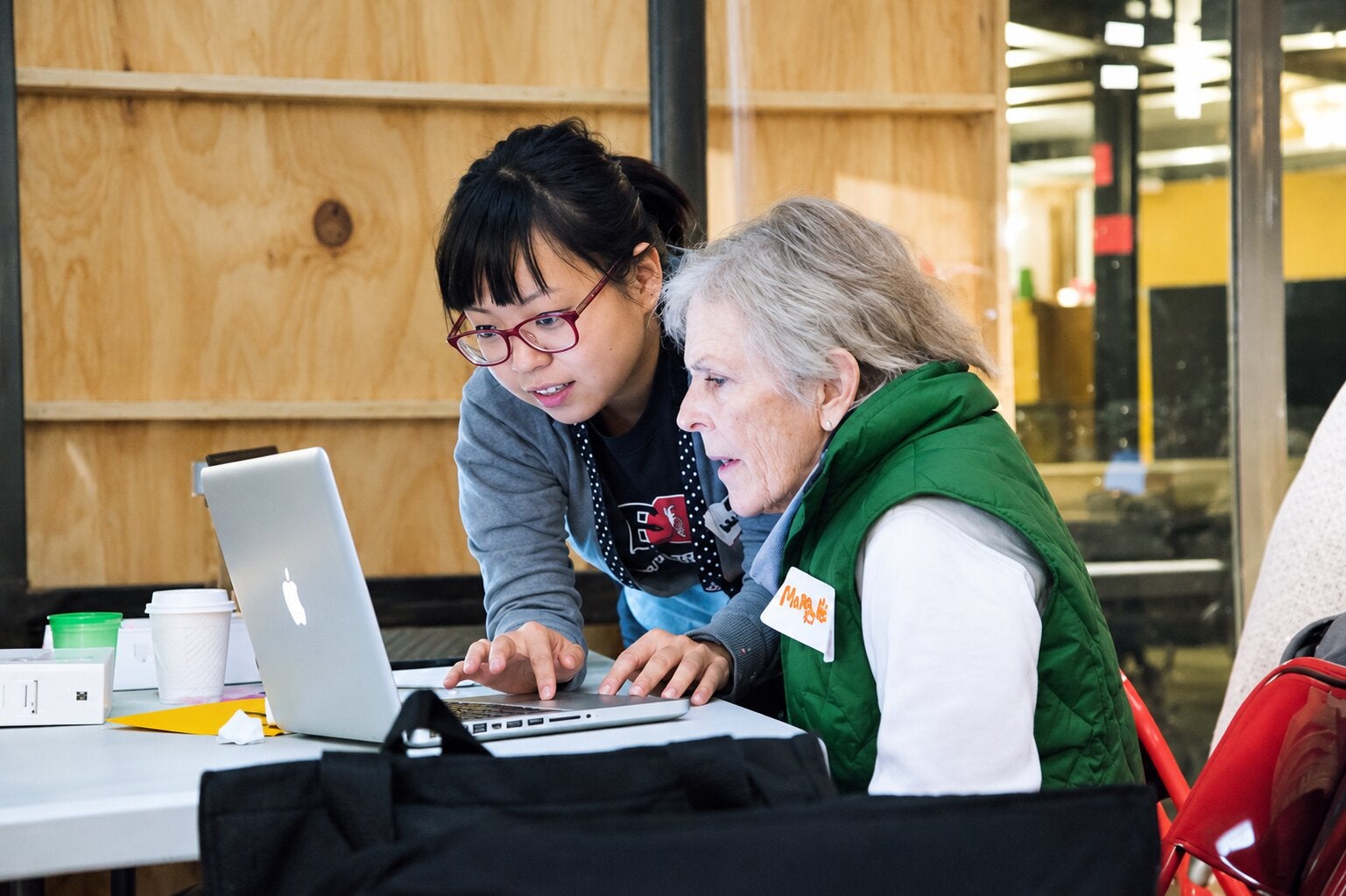
KINGSTON, R.I. – Nov. 9, 2026 – University of Rhode Island Professor Skye Leedahl partnered with Jill Juris, associate professor at Appalachian State University, to create the structure for an intergenerational technology program in which mentors and mentees learn from each other.
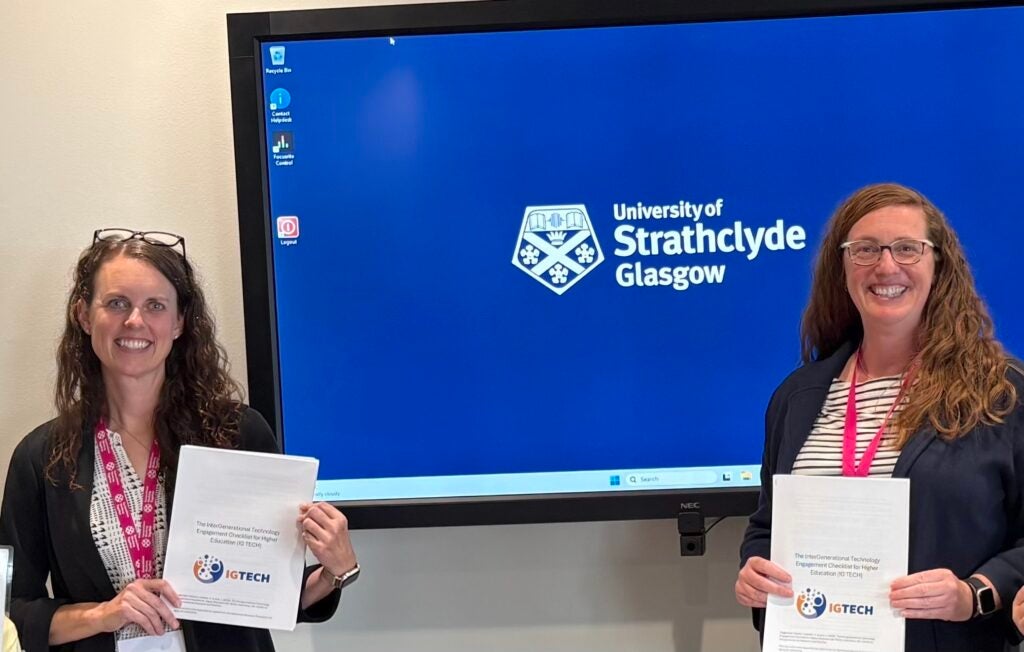
The initiative, which the professors designed as a blueprint for other higher education institutions to implement their own programs, is called the InterGenerational Technology Engagement Checklist for Higher Education (IG TECH).
“This intergenerational technology program utilizes reverse mentoring to bring generations together,” said Leedahl. “Older adults learn about technology, and the young adults practice their leadership and communications skills.”
Leedahl is the chair of URI’s Department of Human Development and Family Science in the College of Health Sciences. Juris is chair of Appalachian State University’s Department of Recreation Management and Physical Education.
The researchers found that the program changed how young adults perceive older adults and improved the well-being of the older adults.
“Our research prior to the development of IG TECH showed that young adults participating in these programs increased ageism sensitivity and had more positive attitudes toward older adults, particularly in regard to working with them,” said Leedahl. “Older adults showed increased technology usage and digital confidence and improved social well-being, such as decreased social isolation and loneliness.”
Creating a template for others
To assist those at other higher education institutions, the researchers undertook a three-part study to help them create a checklist of action items to assist any in establishing an intergenerational technology program of their own.
In an article in the journal Innovation In Aging, the researchers presented findings from the first study in which they interviewed higher education representatives with experience implementing programs and staff members of Cyber Seniors, a nonprofit that provides technology training for older adults.
They then drafted the checklist utilizing results from the first study and a systematic review of 17 sources that addressed key elements of intergenerational programs such as planning, technology, accessibility, inclusivity, recruitment, marketing, safety, implementation, staffing, and training.
The final study added a panel of 47 experts from across the world who reviewed the checklist and made suggestions using a systemic research protocol. The program was then piloted at New Brunswick Community College and George Mason University.
The final version of the checklist includes six stages: initial partnership planning, higher education planning, older adult recruitment, pre-launch planning, implementation and monitoring, and program review and follow-up.
Establishing a public presence
Leedahl and her colleagues received two grants from the RRF Foundation which supported research that led to the program’s development as well as continued work and collaboration with stakeholders, which included having The Ohio State University develop marketing materials and a web presence for IG TECH within their website for the Center for Intergenerational Research and Practice (CIRP).
“Working with Skye is a pleasure because she combines a compelling vision with structured execution,” said Nathan Workman, CIRP program coordinator and research administration management associate at The Ohio State University. “She is exceptionally detail-oriented, a clear communicator, and truly one of the most gracious, approachable colleagues in the field.”
The CIRP website and dedicated IG TECH subpages officially launched in May 2026, kicked off by a live launch webinar.
“The public response to the platform has been overwhelmingly positive,” said Workman. “Following the launch webinar, 100% of surveyed participants indicated they planned to leverage the IG TECH resources to design new programs or refine existing ones. Furthermore, our site analytics show that the IG TECH hub is a primary driver of overall web traffic: active visitors spend 57% more time on the IG TECH pages compared to the site-wide average, demonstrating deep user engagement with these materials.
Building project sustainability
While initial grant funding for the project ended at the beginning of November, Leedahl, Juris, Workman, and others involved in the project are taking advantage of the momentum that has been generated.
Leedahl and Juris are attending professional conferences, such as the three-day Global Intergenerational Congress held in Scotland earlier this fall, where they encourage people to utilize the resources on the website.
Through informal quarterly communities of practice meetings, practitioners and researchers have a space to explore the IG TECH toolkit, learn practical application strategies, and connect directly with the expert creators through open question and answer sessions.
“Beyond resource sharing, these sessions aim to cultivate new intergenerational research and program partnerships,” said Workman. “While the project is only five months post-launch, these quarterly gatherings will serve as an incubator for next-generation intergenerational technology initiatives.”