KINGSTON, R.I. – Nov. 23, 2026 – You could have worse reading models than “Captain Underpants,” says Theresa Deeney, professor of reading education in the University of Rhode Island’s Feinstein College of Education, commenting on a popular reading selection for National Family Literacy Month this November.
A literacy expert and coordinator of URI’s Master of Arts in Education/Reading Education and the Graduate Certificate in Dyslexia Knowledge and Practice, she teaches courses in literacy/reading at the undergraduate and graduate levels and has made her whole career about teaching children how to read and, now, teaching URI education majors how to do the same.
Deeney was also named an Outstanding Teacher of Reading by the International Literacy Association and received a URI Teaching Excellence Award this year. She has served as a Literacy Ambassador for the Rhode Island Department of Education and is a member of the Rhode Island State Literacy Council. Deeney also directs URI’s After School Literacy Program.
Certainly, teaching reading is Deeney’s superpower. And to her URI students, she imparts the message that an undy-wearing protagonist might just be the way to a young reader’s bookshelf.
If that gets a student to pick up a book, so be it, says Deeney, to see more school-age children enjoy the pleasures of reading for fun.
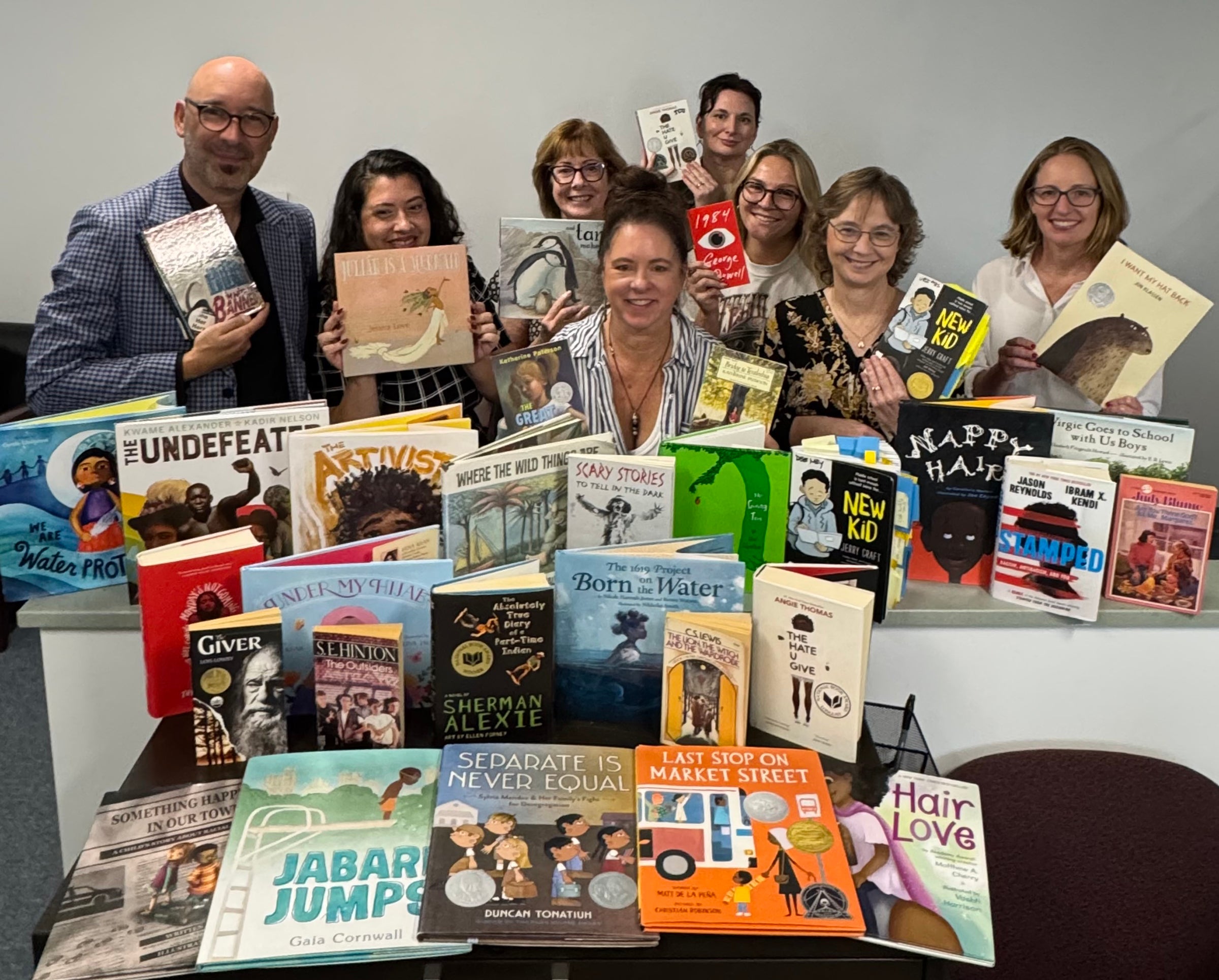
Deeney works with her URI students to read and consider “challenged” books. Book banning is not as prevalent in New England, but it still exists, she says. She and her colleagues in the College of Education are also often asked to suggest books for novice readers. Having a range of books to choose from encourages expanded reading as students get more confident in their own reading abilities and, ultimately, choices, Deeney said. She is one of several URI faculty members advocating against book bans because of one end result—a decline in student reading.
To prepare her students for the issue, Deeney reads “challenged” books with them in the junior-level course she teaches—EDC 423, Teaching Comprehension and Response in Elementary School. They read “New Kid” by Jerry Craft, which won a Newbery Award in 2020, the first graphic novel to do so.
“Challenging and banning books is a problem of access,” Deeney said. “Who decides which books are ‘legal’ and which are not? It’s a slippery slope. Our students can relate because some books they remember reading as teens are ones that have been labeled as controversial. It makes them realize this isn’t about someone else; it’s about all of us.”
Deeney says that book banning impacts today’s K-12 students in terms of seeing their own realities reflected in what they read.
“We teach our pre-service teachers that our K-12 students need books that are mirrors to help them see themselves, windows to help them see into others’ lives, and sliding glass doors to experience other worlds,” she says. “If we take some books off the shelves, we are limiting children’s ability to find themselves and learn about others.”
Deeney doesn’t dispute parents’ rights to be interested in what their children are reading.
“Parents have the right to censor what their own children read,” she said. “But sharing a reading with your children allows you to talk about issues in a safe space. What’s happening in a book isn’t happening to you, so it gives you that arm’s length to have a conversation. Why did so-and-so do that? Let’s talk about that.”
Deeney says there are a few ways that parents and community members can support teachers and school administrators around the issue of book-banning.
“Respect teachers’ professionalism,” she said. “If a book raises challenging issues, teachers are going to talk about that issue with students. If parents don’t want their children to read a certain text, they most certainly have the right to convey that to the teacher.”
The organization Pen America publishes maps each year showing where book bans are happening on a state-by-state basis. On the most recent map, Rhode Island is a low/no-ban state, along with most of the rest of New England and several other states across the country. Most recorded book bans in the past year occurred in Texas and Florida.
Deeney says that many books she’s read and taught in the classroom have been challenged or banned; she’s sometimes surprised by the books that come up for challenge. She also notes there’s a difference between “teaching” a book and having it in the classroom for children to read.
“‘Captain Underpants’ was a particular favorite of some of my students,” she said. “It’s not my cup of tea, but if it gets kids reading…”
She says that teachers should read books in advance to preview language and content and think about ways to present a text.
Deeney also highlights many banned books as personal favorites: “I have many! I love ‘New Kid,’ the book we read this fall. I also love some picture books, like ‘And Tango Makes Three,’ and adolescent novels including ‘To Kill a Mockingbird.’ There are too many to list!”